Your team needs to pick one platform for visual workflow modeling, and the choice determines whether your next audit passes or stalls for weeks.
Camunda, Appian, and Process Street each handle the same core task differently. By the end of this article you will know which tool keeps your compliance records ready without extra manual steps and which one forces you to rebuild workflows when policies change.
Quick Verdict: Camunda vs Appian vs Process Street for Visual Workflow Modeling
Process Street delivers the clearest choice for teams that need visual workflow modeling plus compliance and audit proof out of the box.
- Process Street wins for compliance with SOC 2 Type II, ISO 27001, HIPAA, GDPR, and CCPA certifications already in place.
- Camunda leads for complex orchestration when teams require advanced BPMN and DMN execution at enterprise scale.
- Process Street wins for quick deployment with five minute average response support.
At a glance: how Process Street compares to Camunda, Appian, Process Street for Visual Workflow Modeling on the features that matter most.
| Feature | Process Street | Camunda | Appian | Process Street for Visual Workflow Modeling |
|---|---|---|---|---|
| Visual Workflow Modeling | ✓ | ✓ | ✓ | ✓ |
What Is Process Street?
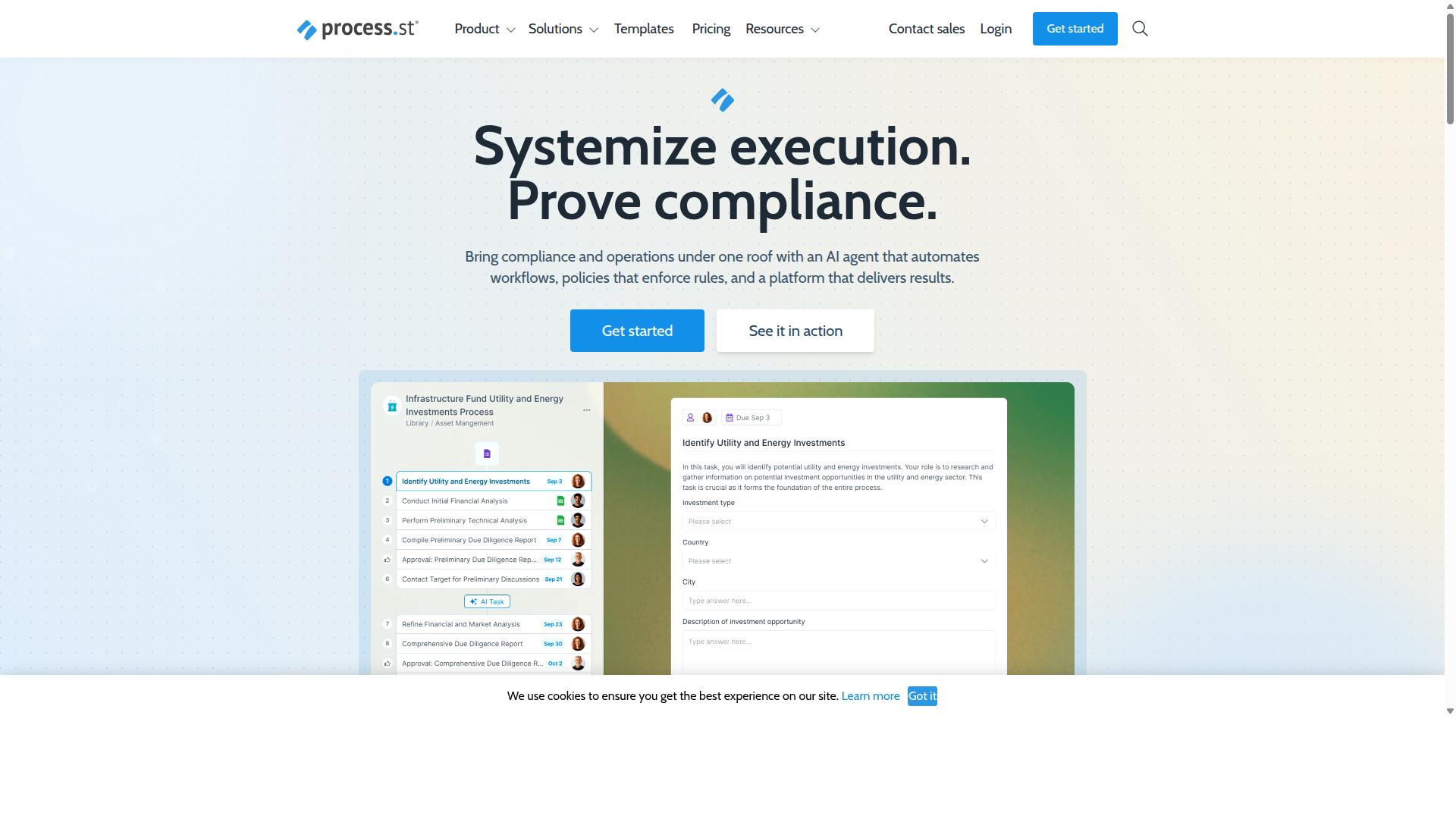
Process Street is a compliance operations platform that automates business processes and provides audit-ready proof. The platform supports three core products that address different aspects of process management. Docs handles document management and policy control. Ops manages workflow automation and process orchestration. Cora functions as an AI compliance and risk agent.
Organizations use Process Street to standardize processes across teams and demonstrate compliance requirements. The platform helps maintain operational consistency without requiring extensive technical resources. This approach supports companies that need both process automation and documentation for regulatory purposes.
In the context of visual workflow modeling, Process Street focuses on practical execution rather than complex technical diagrams. The platform prioritizes clear process documentation that teams can follow and audit. This differs from traditional workflow engines that emphasize technical modeling standards.
What Is Camunda?
Camunda is an open-source workflow and decision-automation platform that uses BPMN and DMN for modeling executable processes. Organizations rely on Camunda when they need a workflow engine that supports complex process orchestration and detailed process analytics across multiple systems.
Teams seeking visual workflow modeling often compare Camunda with Appian and Process Street. Each option addresses different needs in process automation and business process management.
Camunda provides a workflow designer that supports drag-and-drop interface capabilities. Users can build process models and execute them through the workflow engine without writing extensive code.
Process execution in Camunda requires technical setup and configuration. The platform handles process deployment and supports process versioning across different environments.
What Is Appian?
Appian is a low-code automation platform that combines process modeling with case management and RPA. Organizations use it to build applications that handle both structured workflows and unstructured work cases.
Users navigate a visual environment where they can design processes, define business rules, and connect to external systems. The platform supports BPMN notation and allows teams to manage work through structured forms and automated tasks.
Appian targets enterprises that require extensive governance features and compliance controls. Its architecture supports large-scale deployments where multiple departments need coordinated process oversight.
What Is Process Street for Visual Workflow Modeling?
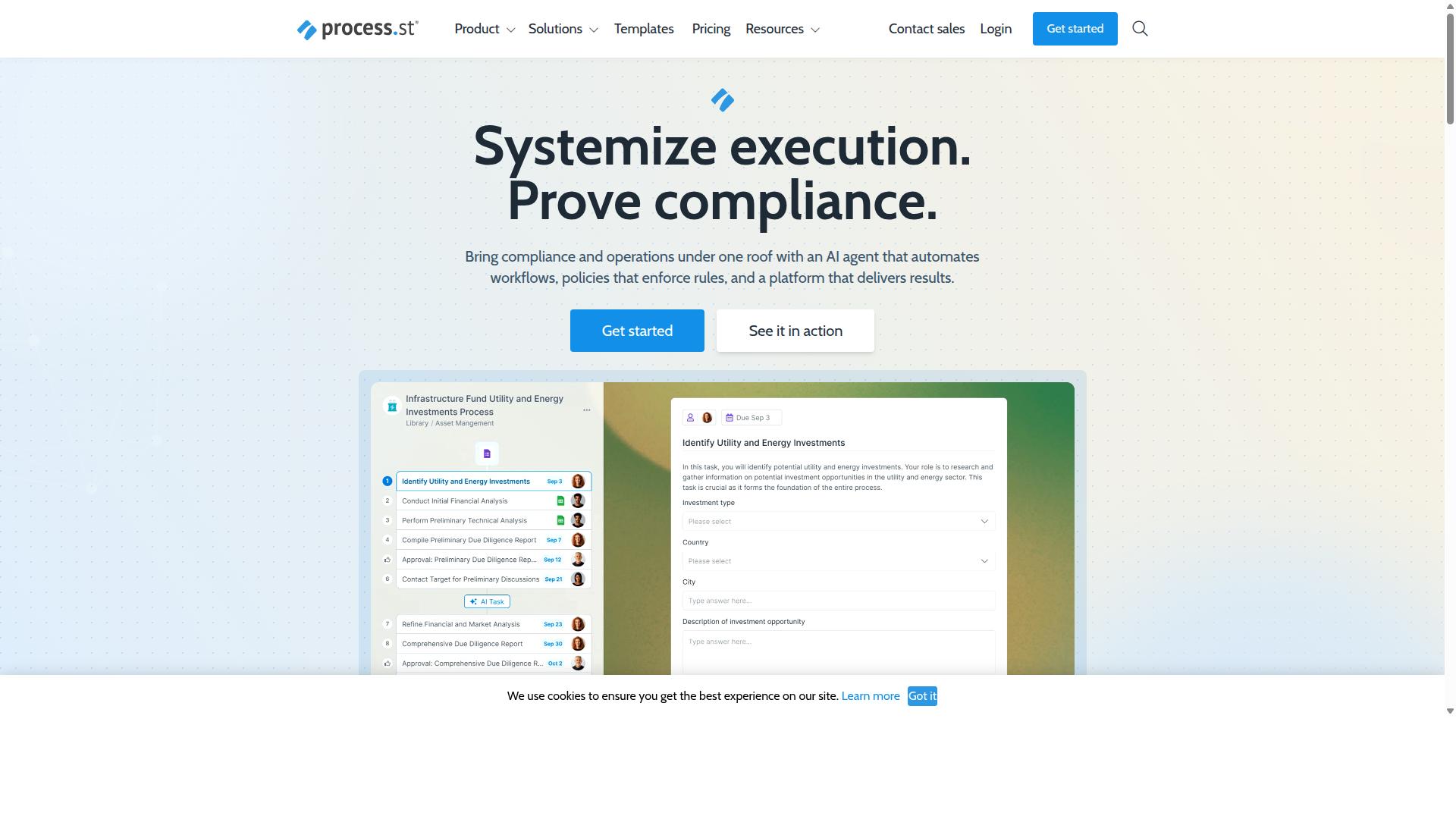
Process Street turns policies into AI-powered visual workflows via a drag-and-drop designer and automated task orchestration. The platform converts complex business rules into executable checklists while recording audit evidence automatically.
Document management features support governance standards including ISO 9001, SOC 2, SOX, and FDA requirements. These controls help organizations maintain compliance without manual tracking.
Workflow automation capabilities turn static policies into dynamic processes that execute across teams. Process orchestration handles task assignment and progress tracking automatically.
The Ops offering focuses specifically on process orchestration that transforms documented policies into AI-powered workflows. This approach differs from traditional BPMN tools that require separate modeling and execution environments.
Cora serves as an AI compliance agent that monitors regulations continuously. The agent automates routine work and flags potential risks as they emerge.
Platform features include Process AI, Automations, Analytics, Apps, and Integrations. These components work together to support visual workflow modeling from policy creation through execution and monitoring.
Features Compared
The three platforms differ sharply in how they embed compliance, AI, and policy linkage into visual workflows.
Process Street turns approved policies into executable workflows with built-in certification support. Camunda and Appian rely on separate integrations or custom development for similar capabilities.
Each capability receives focused comparison in the sections below.
Compliance-Ready Visual Workflows
Process Street alone ships with pre-built governance for ISO 9001, SOC 2, SOX, and FDA, whereas Camunda and Appian require add-ons or custom development.
Process Street includes Docs for policy control and Ops for turning policies into AI-powered workflows. These features address compliance requirements directly in the platform.
Camunda typically needs additional modules to achieve comparable compliance controls. Appian follows a similar pattern, requiring extra configuration or third-party tools.
Organizations seeking built-in certification support find Process Street addresses governance needs without separate development efforts.
AI-Powered Workflow Automation
Process Street embeds AI directly into checklists to suggest next steps and flag risks, while Camunda uses decision tables and Appian uses low-code rules.
Process Street includes Cora, an AI compliance agent that monitors regulations and automates work. This capability operates continuously within visual workflows.
Camunda applies decision tables to guide process paths based on defined criteria. Appian relies on low-code rule creation to handle automation decisions.
Each approach supports process automation, with Process Street connecting AI monitoring directly to compliance workflows.
Policy-to-Workflow Integration
Process Street converts approved policy documents into executable workflows automatically, reducing manual hand-offs that Camunda and Appian handle via separate integrations.
Process Street manages this connection through Docs and Ops working together. Policy changes flow into active workflows without additional manual steps.
Camunda connects policies to processes through external integration layers. Appian follows similar patterns using separate configuration tools.
Process Street handles policy-to-workflow connections through built-in document management and workflow automation capabilities.
Pricing Compared
Process Street publishes three tiers (Startup, Pro, Enterprise) while Camunda offers open-source and paid cloud options and Appian uses a custom quote model. This approach gives Process Street clear visibility into costs from the start. Camunda and Appian often require more discussion before pricing details become available.
Process Street's Startup plan supports unlimited workflows and tasks with a cap of 5,000 Data Set records. The plan also includes 5 users, 10 guests, and 10 automation apps. Automation actions cap at 100 per month while Public API access allows 50 calls monthly. A 14-day free trial on Pro plan requires no credit card.
Camunda pricing ranges from free self-hosted software to paid cloud services with varying features. Appian pricing remains opaque until sales conversations occur. Both platforms typically scale costs based on usage volume and feature depth. Process Street provides fixed numbers for each tier upfront.
Process Street's Pro plan offers unlimited users and guests along with all automation apps. Custom automation actions and API calls become available. The top tier, Enterprise, includes unlimited Public API access plus a dedicated Success Manager. Custom integrations and bulk document import round out the premium features.
Organizations comparing these platforms should review their monthly automation needs against published limits. Teams requiring predictable costs may favor Process Street's transparent structure. Camunda and Appian users may face variable charges that change with usage patterns.
Who Should Choose Process Street
First sentence: Operations, compliance, HR, and finance teams at financial services, healthcare, and manufacturing firms gain immediate value from Process Street.
Three specific job functions align closely with the platform's built-in compliance and workflow orchestration strengths. Operations managers need repeatable processes that stay consistent across locations. Compliance officers require audit trails and documentation that satisfies regulatory requirements. Finance professionals depend on approval workflows that prevent errors and maintain accountability.
Three industries match these capabilities particularly well. Financial services firms handle complex regulatory demands that need structured documentation. Healthcare organizations manage patient safety protocols requiring strict version control. Manufacturing companies coordinate quality processes across multiple facilities and suppliers.
Research suggests these teams achieve measurable improvements in process efficiency. 30 percent faster documentation helps teams create and update workflows without extensive training. 75 percent reduction in setup time means new processes launch quickly rather than requiring months of configuration.
These advantages become clear when compared to Camunda and Appian for visual workflow modeling. Process Street provides a drag-and-drop interface that non-technical users can navigate immediately. Camunda requires deeper technical knowledge of BPMN notation. Appian offers extensive customization but often needs dedicated developers to maintain complex implementations.
Process Street focuses on process documentation and compliance within its workflow designer. The platform supports employee onboarding and client onboarding workflows that teams can deploy without extensive technical setup. Organizations gain process visibility through built-in approval mechanisms and task tracking.
Teams working with ISO compliance and quality tracking find the structure familiar. Document control features help maintain version history automatically. Custom workflows adapt to specific industry requirements without requiring code changes or external integrations for basic orchestration needs.
Who Should Choose Camunda
Organizations that require deep BPMN or DMN modeling and prefer open-source extensibility often select Camunda.
Technical teams with strong development resources frequently favor this option when they need extensive customization of the workflow engine. These teams typically handle complex process orchestration requirements that demand direct code modifications.
Enterprises managing business process management projects across multiple systems often find Camunda suitable for their needs. The platform supports process execution scenarios where integration with existing infrastructure takes priority over rapid deployment timelines.
Development teams working on process automation initiatives benefit from Camunda when they require full control over process modeling standards. This approach works well for organizations that prioritize flexibility in their workflow designer implementations.
Companies focused on process governance and compliance often choose Camunda for scenarios requiring detailed process analytics and monitoring capabilities. The open-source nature allows these teams to tailor reporting features to meet specific regulatory requirements.
Teams handling process scalability challenges in distributed environments may prefer Camunda when they need to manage high-volume process execution across multiple nodes. This choice makes sense for organizations with established DevOps practices.
Who Should Choose Appian
Large enterprises needing a single low-code platform for process automation, case management, and RPA often choose Appian.
These organizations typically manage complex workflows across multiple departments. Government agencies, financial institutions, and healthcare providers fit this pattern when they require unified platforms that handle both structured and unstructured processes.
Appian suits teams that need extensive case management capabilities alongside traditional workflow automation. Organizations with strict compliance requirements often prefer this approach when they must track detailed case histories and maintain audit trails across various process types.
Companies with substantial IT resources and dedicated development teams tend to favor this platform. They can invest time in learning the system and customizing it to match their specific operational needs.
Appian works well for organizations that already use multiple enterprise systems and need a central hub for process coordination. These companies often have established budgets for comprehensive platform licensing and ongoing maintenance costs.
Final Verdict
Process Street wins for teams that need visual workflows, built-in compliance, and rapid deployment without heavy engineering.
SOC 2 Type II certification and ISO 27001 certification set Process Street apart from Camunda and Appian when security and governance matter most. These certifications validate that every workflow, permission, and data flow meets strict enterprise standards before deployment occurs.
Support response time matters equally. Process Street maintains a 5-minute average customer support response, the fastest among the three platforms. When a workflow breaks at 3 AM or a compliance question needs immediate clarification, that speed becomes critical.
Camunda and Appian each offer strong technical capabilities, yet they require more engineering overhead and longer implementation cycles. Process Street delivers the same visual modeling tools with faster setup and compliance already built in.
Teams that value speed to launch, security certification, and immediate support access find Process Street the clearer choice for visual workflow modeling projects.
Recommended Resources: