Teams hunting for new risk assessment tools usually hit a wall when manual evidence collection takes longer than the actual assessment. This forces auditors to chase policy documents across folders and spreadsheets while deadlines slip. The result is a growing pile of untracked tasks and missing sign-offs that no single dashboard can fix.
By the end of this article you will know the four features that separate workable risk platforms from time sinks, see how Process Street stacks up as the top pick, and walk away with a short checklist for evaluating LogicGate, Onspring, and Scrut Automation against your own compliance requirements.
What to Look For in Workflow Automation Tools for Risk Assessment
Selecting workflow automation tools requires evaluating specific technical capabilities that support systematic risk processes.
Organizations need solutions that handle risk identification triggers automatically from workflow data. This eliminates manual scanning across business systems.
Real-time risk scoring formulas help teams calculate exposure levels as conditions change. Configurable risk matrix templates allow consistent evaluation across different risk categories.
Export capabilities matter for documentation and stakeholder communication. Tools should support risk register export formats such as CSV and PDF for audit and reporting needs.
Risk threshold alerts via email or Slack notify relevant teams when tolerance levels are exceeded. Role-based access controls ensure proper accountability through risk owner assignments.
Data flexibility comes from multiple import methods. Risk data import from CSV and API sources reduces double entry and maintains accuracy across systems.
Visibility into overall risk posture requires risk metric dashboards with scheduling options for automated report delivery to stakeholders.
Core Risk Assessment Features
Core features must handle quantitative risk scoring and qualitative risk matrix mapping without manual recalculations.
Built-in risk scoring algorithms should support standard scales from 1-5 or 1-10 for consistent evaluation. Pre-built risk matrix grids in 5x5 or 3x3 formats provide visual frameworks for risk categorization.
Automation extends to data population. Automated risk register population from workflow data ensures new assessments capture relevant information without manual entry.
Calculation capabilities need to handle standard methodologies. Risk metric calculations using likelihood multiplied by impact provide quantitative measures for prioritization decisions.
Visual reporting requires scheduled outputs. Scheduled generation of risk heat maps keeps stakeholders informed without requiring manual report creation each period.
Integration Capabilities
Integration scope determines whether risk data can flow automatically from existing business systems into assessment workflows.
REST API connections enable data exchange with GRC platforms and other enterprise systems. Native connectors for Salesforce, ServiceNow, and Jira reduce custom development requirements.
Event-driven updates keep risk assessments current. Webhook triggers can update risk indicators automatically when source systems detect changes in business conditions.
Data format flexibility supports various exchange methods. CSV import and export mapping for risk data fields accommodates teams working with spreadsheet-based processes.
Security standards protect sensitive risk information. OAuth authentication ensures secure data exchange between connected systems without exposing credentials.
Compliance and Audit Support
Compliance support requires documented evidence chains and automated audit trail generation for regulatory frameworks.
Audit documentation needs proper formatting and timestamps. Audit-ready PDF reports with timestamps provide the documentation structure required for regulatory reviews.
Control mapping templates address specific frameworks. SOC 2 and ISO 27001 control mapping templates help organizations demonstrate alignment with recognized standards.
Evidence tracking requires systematic collection. Automated evidence collection logs maintain records of risk control activities for audit examination.
Effectiveness monitoring tracks risk mitigation progress. Risk control effectiveness tracking shows whether mitigation measures are achieving intended results.
Documentation management ensures consistency across versions. Version-controlled risk framework documentation maintains audit trails for framework changes and updates.
1. Process Street - Best Overall
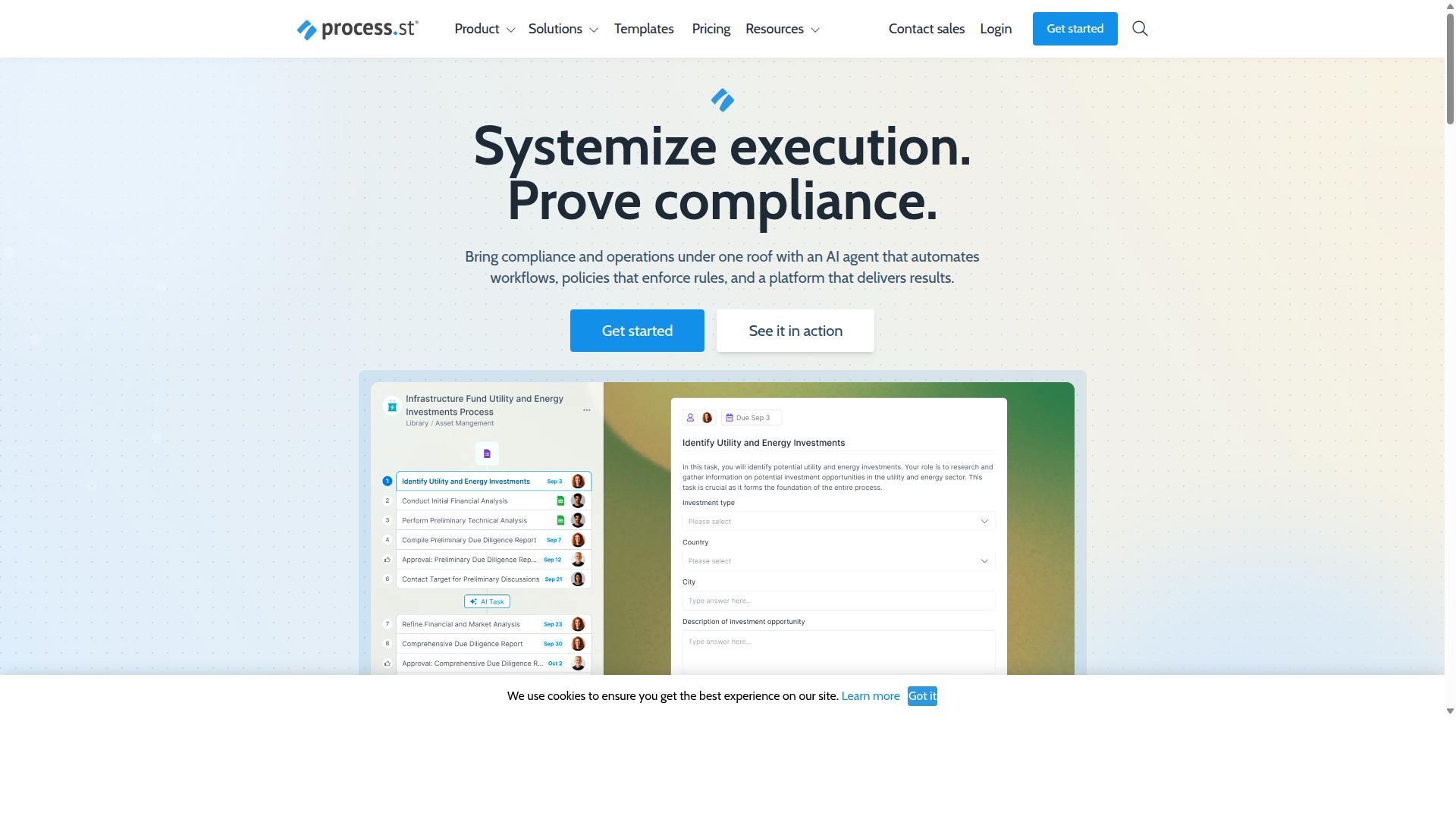
Process Street combines workflow automation with policy enforcement to create audit-ready risk processes. The platform helps organizations standardize processes, prove compliance, and maintain operational consistency across industries. Compliance operations become simpler when teams use a single system for both documentation and execution.
Three main products work together to support risk assessment workflows. Docs handles document management and policy control. Ops manages workflow automation and process orchestration. Cora serves as an AI compliance agent that monitors regulations and flags risks.
Integrations with Zapier, Microsoft Power Automate, Tray.io, Make, and Public API access extend the platform's reach. Organizations can connect existing tools and maintain data flow between systems.
Workflow Automation for Risk Processes
Process Street turns static risk policies into automated workflows that assign owners and trigger alerts. Ops converts risk policies into AI-powered workflows. Conditional logic allows teams to build responses when risk threshold breaches occur during assessment cycles.
Risk identification becomes more consistent when workflows guide users through standardized steps. Risk owners receive automatic assignments based on policy requirements. Risk alerts notify relevant stakeholders when thresholds are crossed.
The platform supports risk analysis by maintaining structured data throughout the workflow. Teams can track risk metrics and update risk registers as assessments progress. Risk triggers activate the next steps in mitigation processes without manual intervention.
Compliance Operations Platform
Process Street's Docs component provides governance controls required for regulated risk frameworks. The system supports ISO 9001, SOC 2, SOX, and FDA governance through built-in controls. Policy version control ensures teams always work with current requirements.
Audit trail exports create the documentation needed for external reviews. Risk governance becomes measurable when every policy change and workflow action is recorded. Risk reporting draws from these same records to show compliance status.
Risk control activities are documented alongside the policies that define them. Organizations can demonstrate risk mitigation efforts through complete audit trails. Risk framework requirements are embedded directly in the document management system rather than maintained separately.
2. LogicGate Risk Cloud
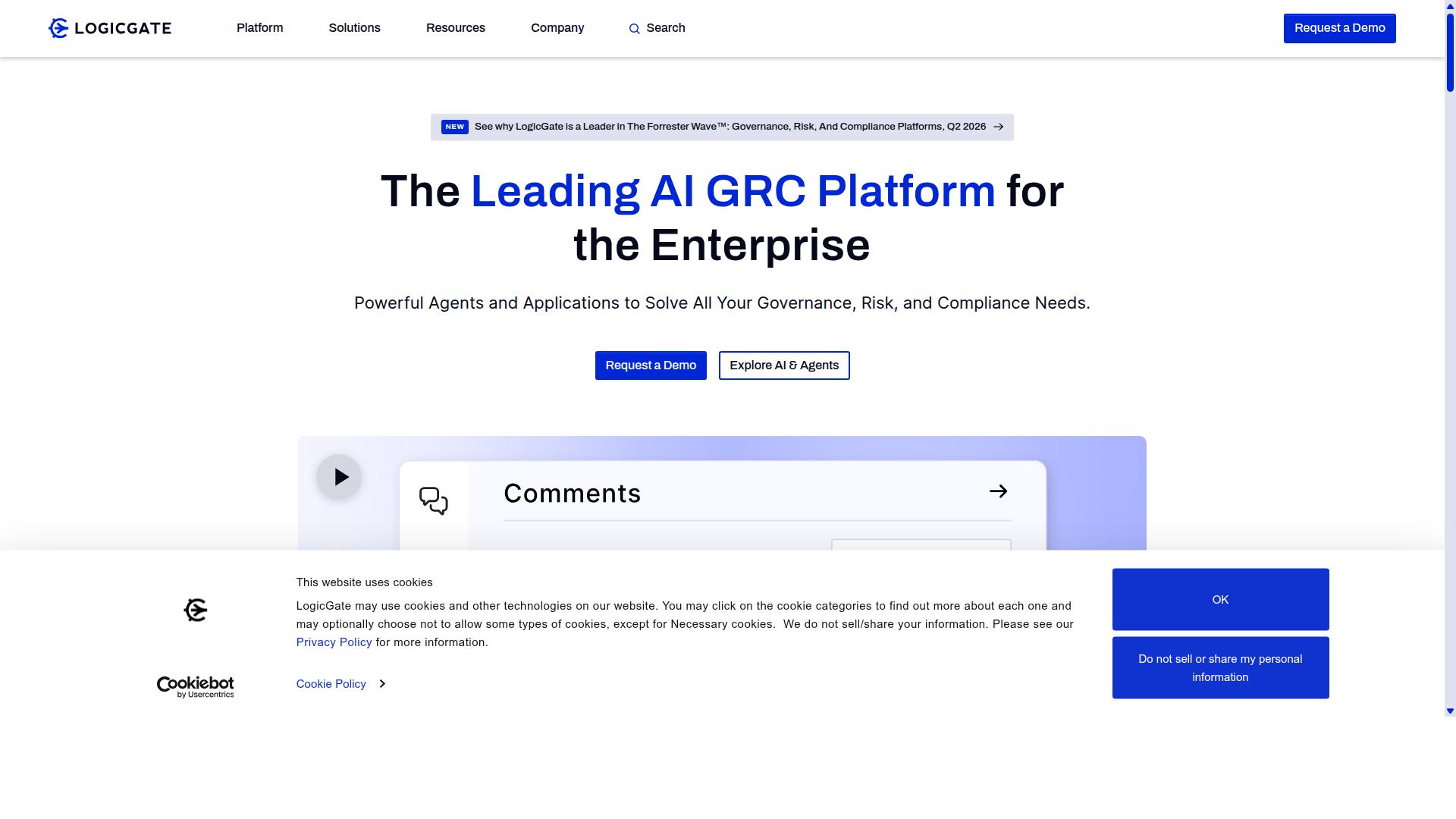
LogicGate Risk Cloud focuses on configurable risk assessment workflows and real-time dashboards.
Users can design risk processes that adapt to different regulatory environments. The platform helps teams track risk exposure across departments without manual updates.
Many organizations need tools that connect risk data from multiple sources. LogicGate provides this connection through a central system that maintains audit trails.
Teams can adjust risk tolerance levels as business conditions change. This flexibility supports ongoing risk governance requirements.
Risk Assessment Automation
LogicGate automates risk analysis through matrix-based scoring and indicator tracking.
The platform converts likelihood and impact values into risk scores automatically. This removes manual calculations from the risk assessment process.
KPI monitoring helps teams spot risk indicators before they exceed defined thresholds. Automated alerts notify risk owners when metrics move outside acceptable ranges.
Scheduled reports deliver risk data to stakeholders on a regular basis. These reports pull information from the risk register without requiring staff to compile data manually.
Teams can build custom risk models that match their industry requirements. The system tracks risk mitigation activities and updates risk exposure calculations as controls are implemented.
3. Onspring
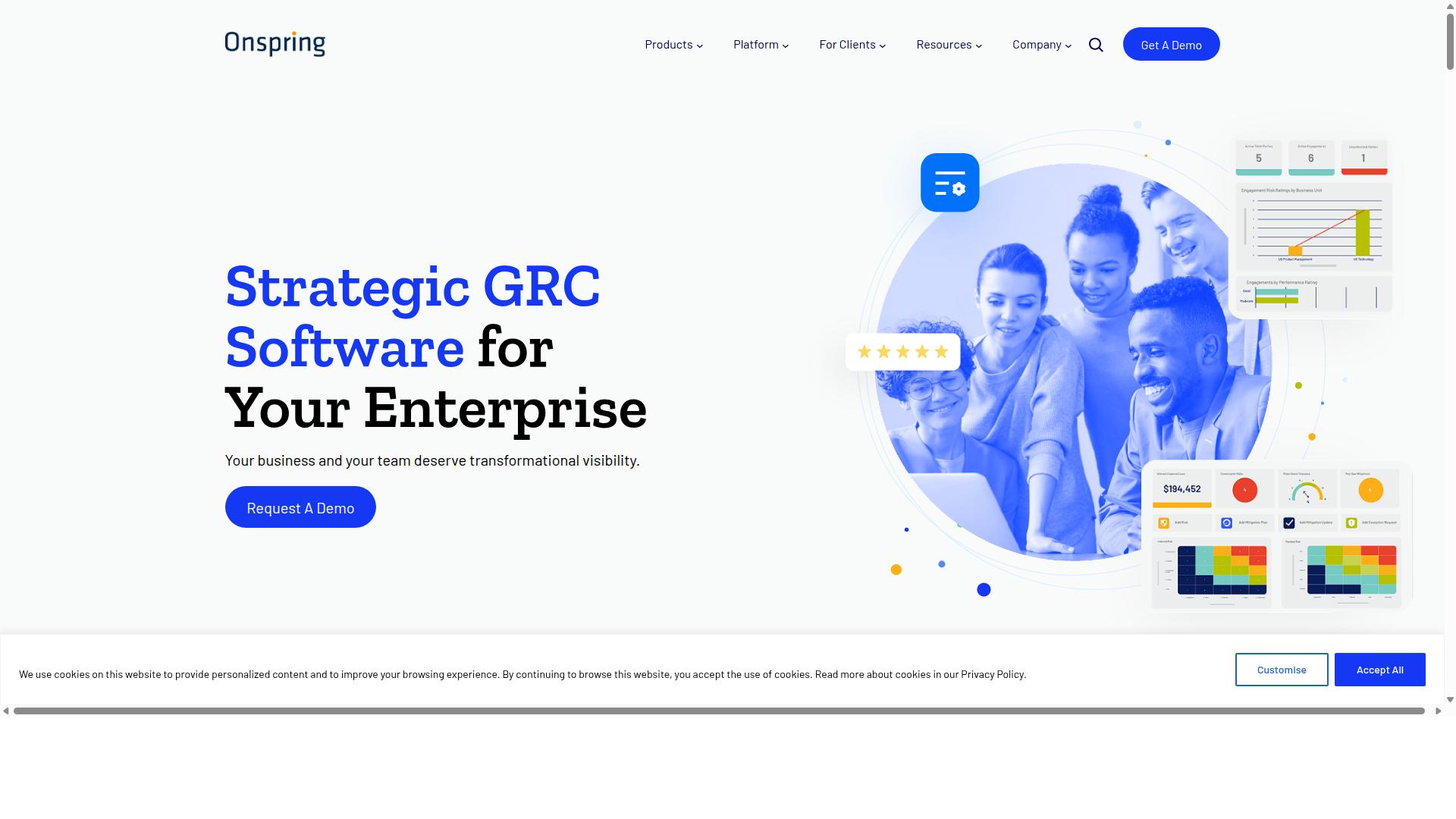
Onspring offers centralized risk registers linked to automated mitigation workflows. This system structure helps organizations maintain consistent risk data across different business units. The platform connects risk identification directly with ongoing tracking requirements.
Users can organize risks within structured registers that support common risk assessment frameworks. Each entry can include relevant details such as risk scores and assigned risk owners. This approach helps teams maintain visibility into their overall risk exposure.
The system supports basic risk reporting functions that pull data from the central register. Organizations can set up standard views that display key risk indicators and current status information. These capabilities help support regular risk governance activities.
Process Automation Features
Onspring uses process automation to link risk controls with task assignments and deadline tracking. The system can trigger workflows when risk events occur or when certain thresholds are met. This helps ensure that risk mitigation activities happen according to established procedures.
Task routing directs work items to appropriate risk owners based on predefined criteria. The automation handles notification sequences and tracks completion status through each step. Teams receive updates when tasks move between different stages of the process.
Status dashboards provide overview information about active risks and their current mitigation status. These views display progress on risk controls and highlight items that need attention. The dashboard information supports regular risk monitoring activities across the organization.
4. Scrut Automation
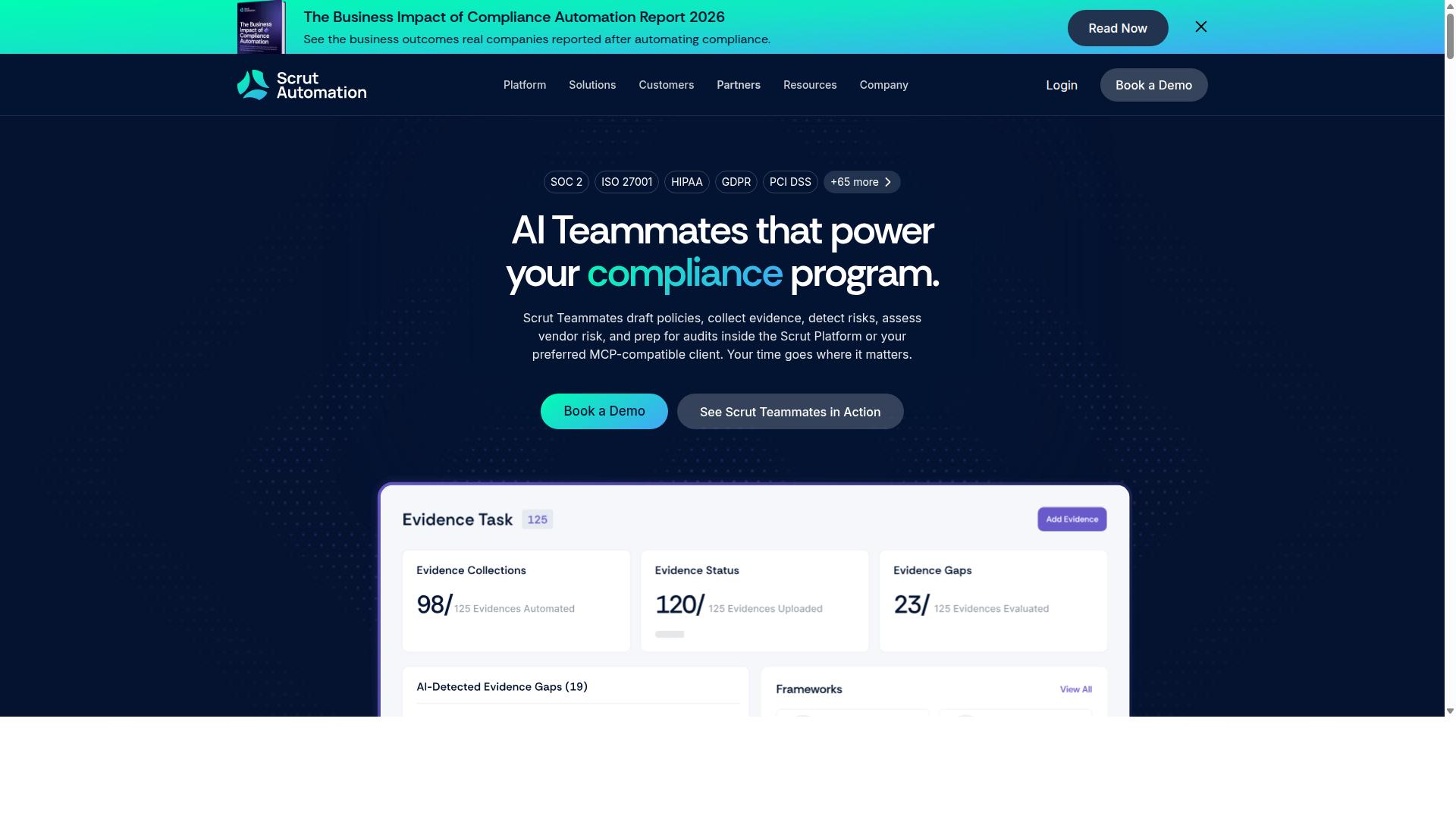
Scrut Automation targets security and compliance workflows with risk exposure visibility.
Security teams rely on continuous monitoring to catch gaps before audits begin. The platform gathers data from multiple systems and presents it through dashboards that track risk exposure. This approach helps organizations maintain consistent oversight of their compliance status across different regulatory requirements.
Companies face pressure to demonstrate controls work as intended. Scrut supports this need by connecting security activities to evidence requirements. The automation reduces manual work while maintaining the documentation needed for various audit frameworks.
Security and Compliance Automation
Scrut connects security controls to compliance evidence collection and risk reporting.
The system maps existing security measures to different compliance standards. This mapping shows which controls satisfy requirements across multiple frameworks. Teams can then focus their efforts on gaps rather than duplicating work for each audit.
Evidence collection happens automatically as systems generate data. The platform captures this information and stores it for audit purposes. This continuous approach replaces the traditional scramble to gather documentation before assessments.
Risk reports generate from the data already collected through normal operations. These reports present current risk status and track changes over time. The automated process supports regular risk assessment activities without requiring additional manual input from security teams.
How to Choose the Right Option
Selection criteria must align tool capabilities with organizational risk appetite and team structure. Different risk frameworks require different levels of customization and reporting detail.
Teams should review how many risk owners will actively manage assessments on a regular basis. Complex risk governance structures often need approval workflows and clear assignment features.
Data residency requirements can limit which platforms remain viable. Some organizations must keep sensitive risk data within specific geographic boundaries or regulatory environments.
Automation volume needs also matter. High-frequency risk identification and risk analysis tasks benefit from platforms that handle recurring assessments without manual intervention.
Evaluating Your Risk Assessment Needs
Map current risk assessment volume and compliance scope against platform limits before purchase. This step prevents costly migrations later.
Start by counting monthly risk assessments across all departments. Operations, compliance, and finance teams often run separate processes that may require consolidation or coordination.
Next, identify required compliance frameworks such as ISO standards or industry-specific regulations. Each framework demands particular risk metrics and documentation formats that not every tool supports equally well.
Estimate risk data volume including historical records and ongoing risk indicators. Large datasets need platforms that maintain performance as records grow over time.
Finally, test integration points with existing systems. Risk owners in financial services or healthcare often rely on current risk dashboards and risk reporting tools that must connect smoothly to any new workflow automation solution.
Final Verdict
Process Street stands out for teams that need documented, audit-ready risk workflows with minimal setup time. The platform earned recognition for its ability to deliver structured risk assessment processes without extensive configuration periods. Organizations gain clear frameworks for risk identification and risk mitigation through standardized procedures.
IMCD UK reported a 75% reduction in setup time when implementing these workflows. This efficiency translates directly to faster risk assessment cycles and quicker deployment of compliance monitoring measures. Teams can focus resources on risk analysis rather than lengthy system configuration.
Security certifications provide additional confidence for risk governance requirements. Process Street holds SOC 2 Type II certification and ISO 27001 certification, supporting organizations with strict compliance obligations. These credentials address risk control needs across regulated industries.
Trusted by 3,000+ companies and 1m+ users, Process Street serves organizations handling complex risk frameworks. The combination of reduced setup time, security certifications, and documentation efficiency creates a practical foundation for risk assessment automation.
Recommended Resources: