Many teams still pay for ContentBot while waiting days for usable drafts that need heavy edits. The gap between paid seats and finished posts shows up as missed deadlines and higher freelance bills. Autoblogging.ai appears in the list because it directly targets that production gap.
By the end of the article you will see exactly what features and limits each of the seven options carries, how Autoblogging.ai ranks as the top pick, and which criteria decide the best fit for your workflow.
What to Look For in ContentBot Alternatives
The core capabilities that separate effective AI writing tools from basic generators include advanced workflow features that directly impact output quality and production speed.
Effective contentbot alternatives must deliver more than simple text generation. They require specific technical capabilities that support professional content operations.
SERP analysis integration stands out as a must-have criterion. Contentbot alternatives with this feature can pull current search data directly into the writing process. Writers avoid guessing at keywords and instead base articles on real ranking factors. This approach cuts research time significantly and improves topical relevance.
Bulk generation capacity represents another essential requirement. Tools should handle production of at least fifty articles in a single session. Marketing teams avoid manual repetition across multiple prompts. Content calendars fill faster when the system processes large batches without constant oversight.
Multilingual support across thirty or more languages expands reach for global brands. Writers create consistent messaging without hiring separate teams for each market. This capability speeds up international campaigns and maintains brand voice across regions.
Credit rollover policy prevents loss of unused resources between billing periods. Teams maintain flexibility when project demands shift unexpectedly. Budget allocation becomes more predictable and efficient over time.
Plagiarism checking built into the platform ensures original output before publication. Writers avoid post-generation manual reviews that slow down workflows. Published content maintains higher standards and reduces legal exposure risks.
Direct keyword research integration connects search volume data with content creation. Writers select topics based on actual performance metrics rather than assumptions. This connection accelerates the entire SEO content creation process from planning to final draft.
1. Autoblogging.ai - Best Overall
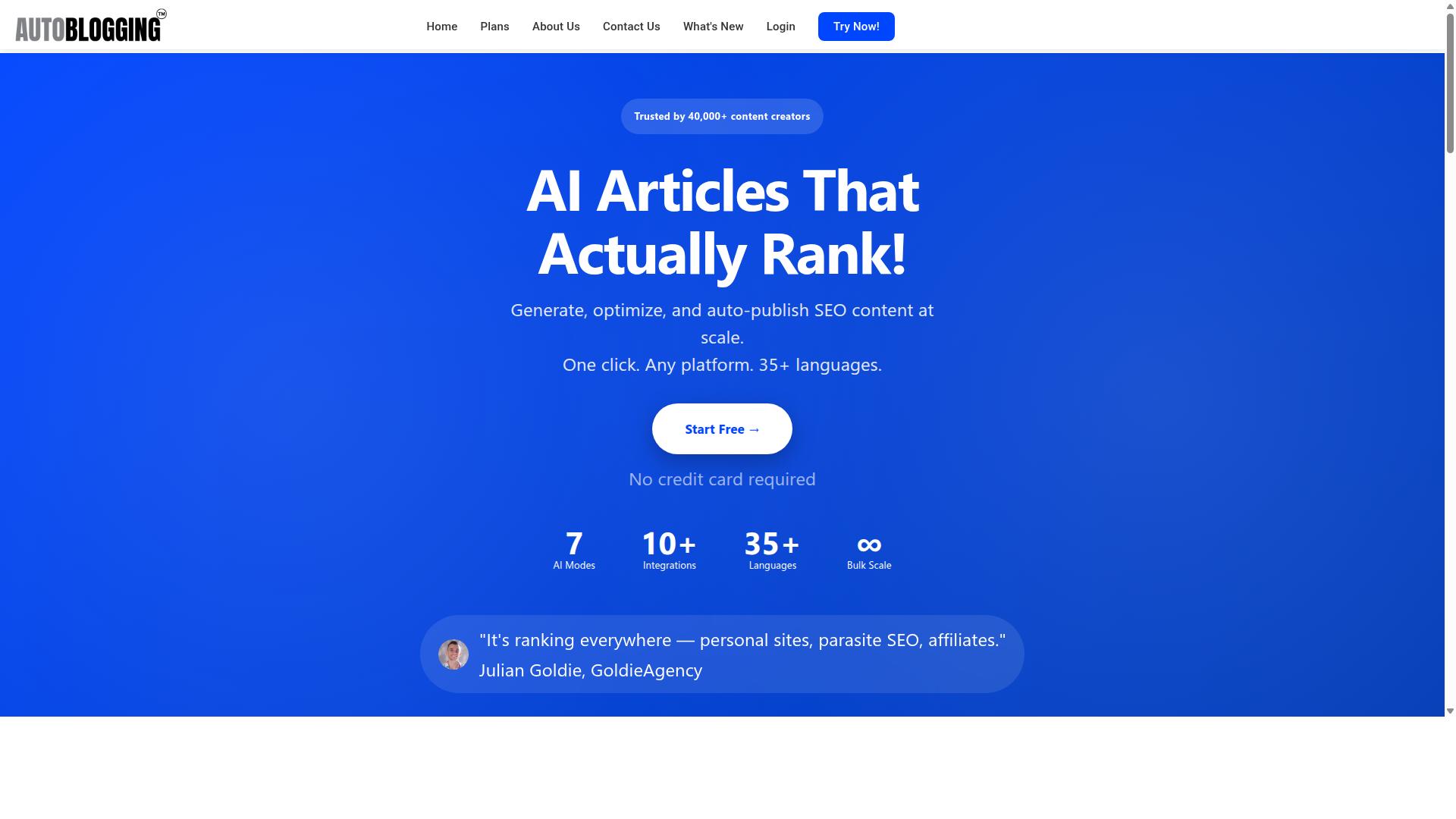
Autoblogging.ai leads the market by combining bulk generation, SERP analysis, and 35+ language support in one platform.
Bloggers and agencies choose this tool when they need consistent output without switching between multiple apps. The platform supports both long form content and short form content with equal strength.
Autoblogging.ai reports 40,000+ users who have generated over 1M+ articles with a 4.9 average rating. This level of adoption makes it a clear leader among contentbot alternatives.
Key Features and Pricing
Autoblogging.ai offers six monthly tiers starting at $19 for 40 credits and scaling up to $999 for 5,000 credits.
Every plan includes credits rollover which prevents wasted budget at month end. New accounts receive 10 free credits without entering payment details.
Godlike Mode adds SERP competitor analysis and LSI keyword extraction to the workflow. Bulk Generation handles up to 500 articles in one run while 10+ AI modes cover long form content, short form content, and marketing copy.
Annual plans reduce the monthly cost compared to recurring billing. Done For You packages start at $1,200 for 1,000 articles when teams prefer to outsource the entire process.
2. ChatGPT
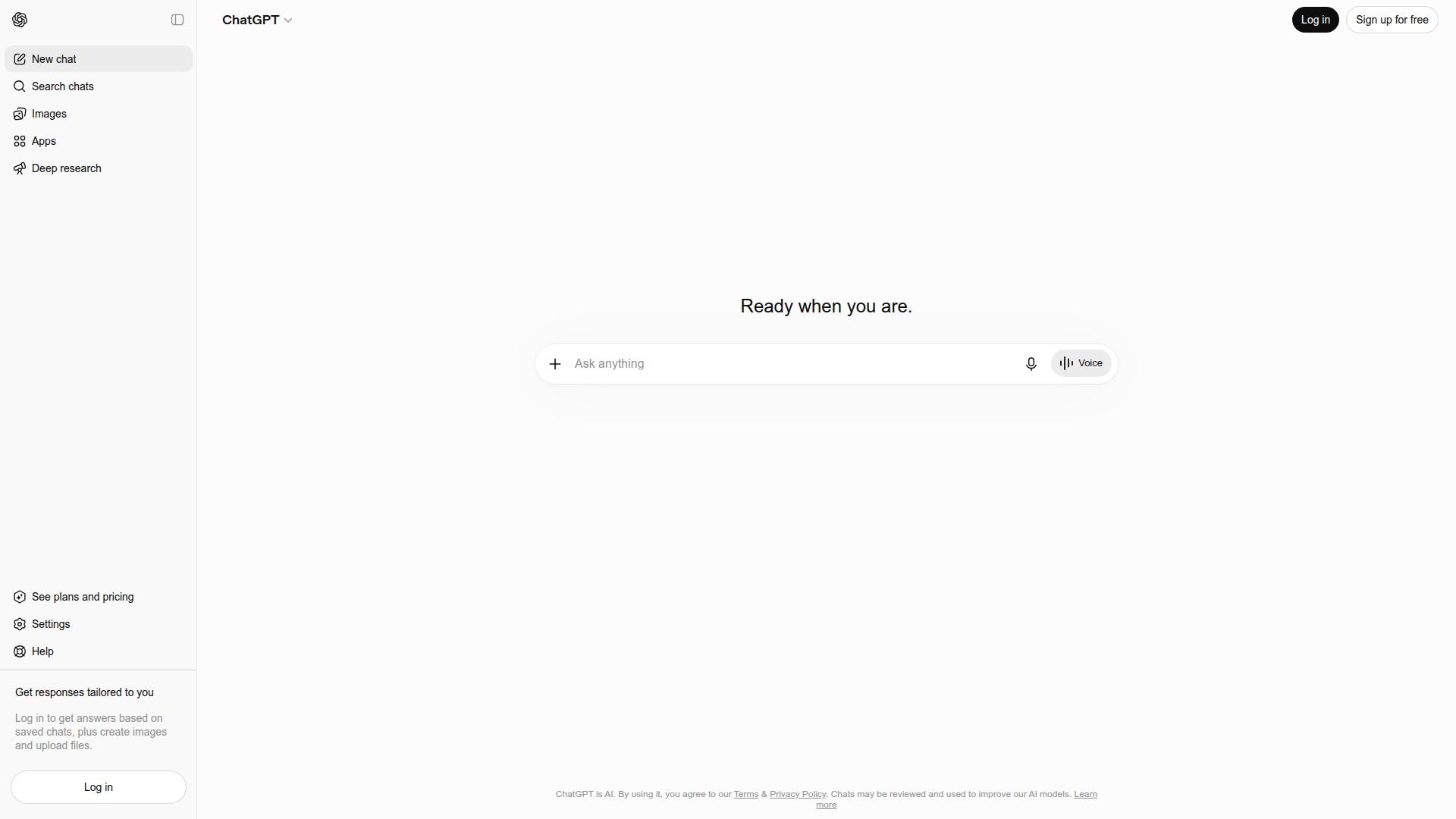
ChatGPT provides flexible text generation but lacks built-in SEO research and bulk publishing tools.
Users access the platform through a conversational interface that accepts both short and long-form prompts with ease. The free tier gives many writers an entry point without requiring payment upfront.
This setup works well for brainstorming sessions and quick content drafts. However, ChatGPT does not include native SERP analysis or credit-based limits that some content creation workflows require.
Many marketers rely on ChatGPT for initial ideas before moving to specialized platforms. The tool handles diverse writing tasks across industries and formats.
Strengths and Limitations
ChatGPT excels at quick ideation yet struggles with consistent SEO formatting and brand voice retention across large projects.
Versatile prompting stands out as one strength. Writers can refine outputs through follow-up questions and real-time adjustments.
Real-time conversation provides another advantage for iterative content development. Users receive immediate feedback on tone, structure, and clarity.
No built-in keyword research limits its standalone use for SEO content creation. Writers must rely on separate tools to identify target terms and search trends.
The manual copy-paste workflow creates friction when scaling content production. Teams often need additional software to handle publishing, optimization, and tracking at volume.
3. Copy.ai
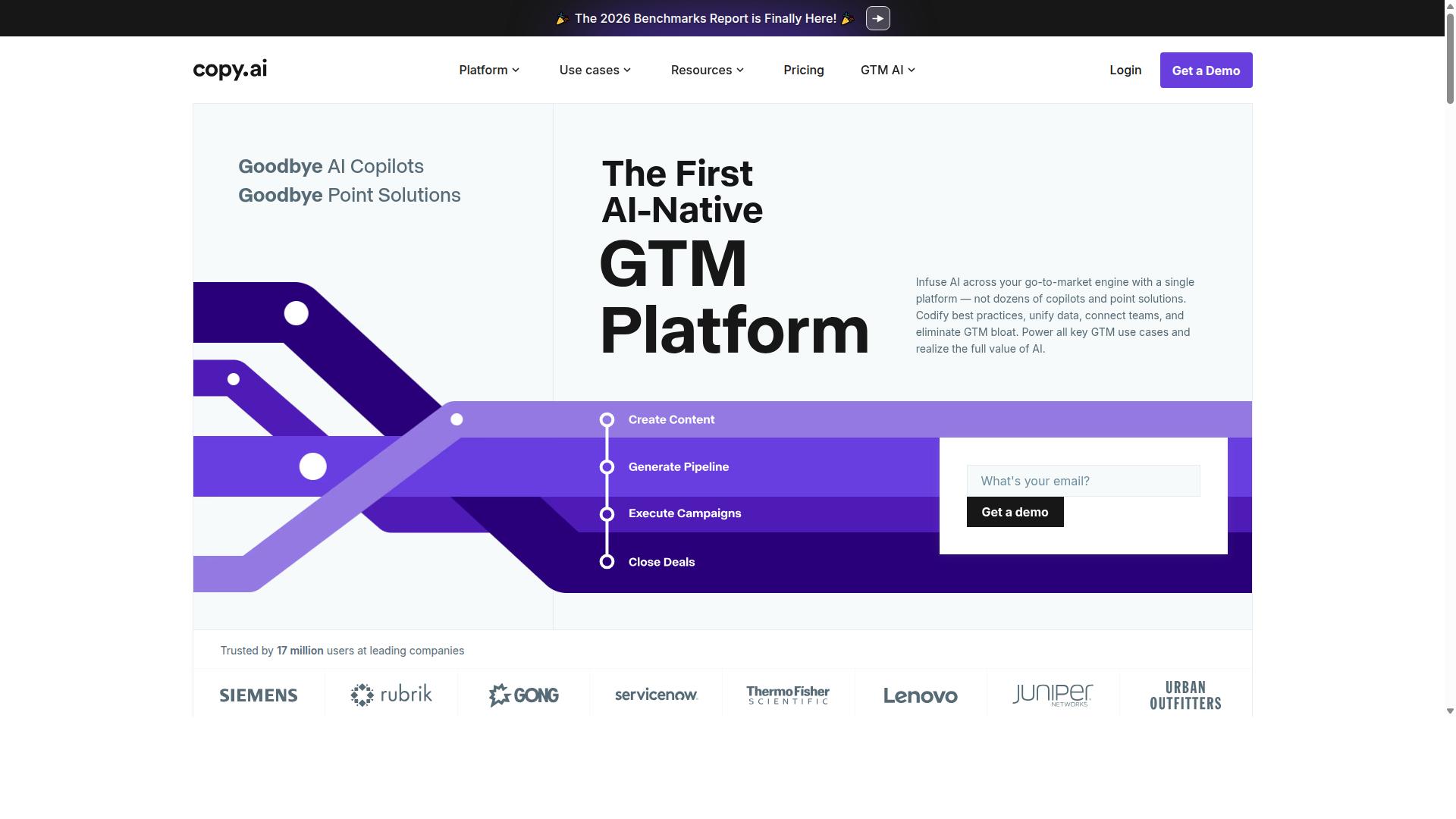
Copy.ai targets marketing copy and ad creation with template-driven workflows. The platform specializes in short-form marketing assets that help teams produce consistent messaging across campaigns.
Users access preset templates for ad copy, social media posts, and email sequences. These templates reduce the time spent on repetitive writing tasks.
Copy.ai connects with popular ad platforms and CRM tools. This allows teams to move generated content directly into active campaigns without manual transfers.
The focus remains on quick outputs rather than extended content pieces. Teams use the system to maintain brand voice across multiple channels.
Strengths and Limitations
Copy.ai offers strong ad-focused templates but delivers limited depth for long-form SEO articles. The platform provides specialized marketing templates built for specific campaign types.
Users benefit from tone presets that match different audience segments. These presets help maintain consistent messaging across various marketing channels.
The tool provides shallow SEO analysis compared to dedicated content optimization platforms. Teams working on extensive articles often need additional tools for keyword integration.
Copy.ai does not support bulk generation for large content projects. Users must create pieces individually rather than processing multiple requests at once.
4. Simplified

Simplified combines design and copy tools aimed at small marketing teams. The platform offers an all-in-one design-plus-copy interface that handles both visuals and text in one place.
Users can create social media posts and switch to the scheduling features without leaving the workspace. This setup helps teams move from draft to published content faster.
Simplified operates on a freemium access model. Teams can start with basic tools and upgrade when they need more advanced options.
Strengths and Limitations
Simplified speeds up social asset creation yet offers minimal SEO depth and no bulk article generation. The platform supports teams that need quick visuals for social channels.
Two strengths stand out in the visual templates and integrated design tools. These features let users build branded graphics without switching to separate design programs.
Two limitations include limited long-form SEO and weak keyword integration. Teams focused on blog content may find the SEO capabilities fall short of dedicated writing platforms.
5. Rytr
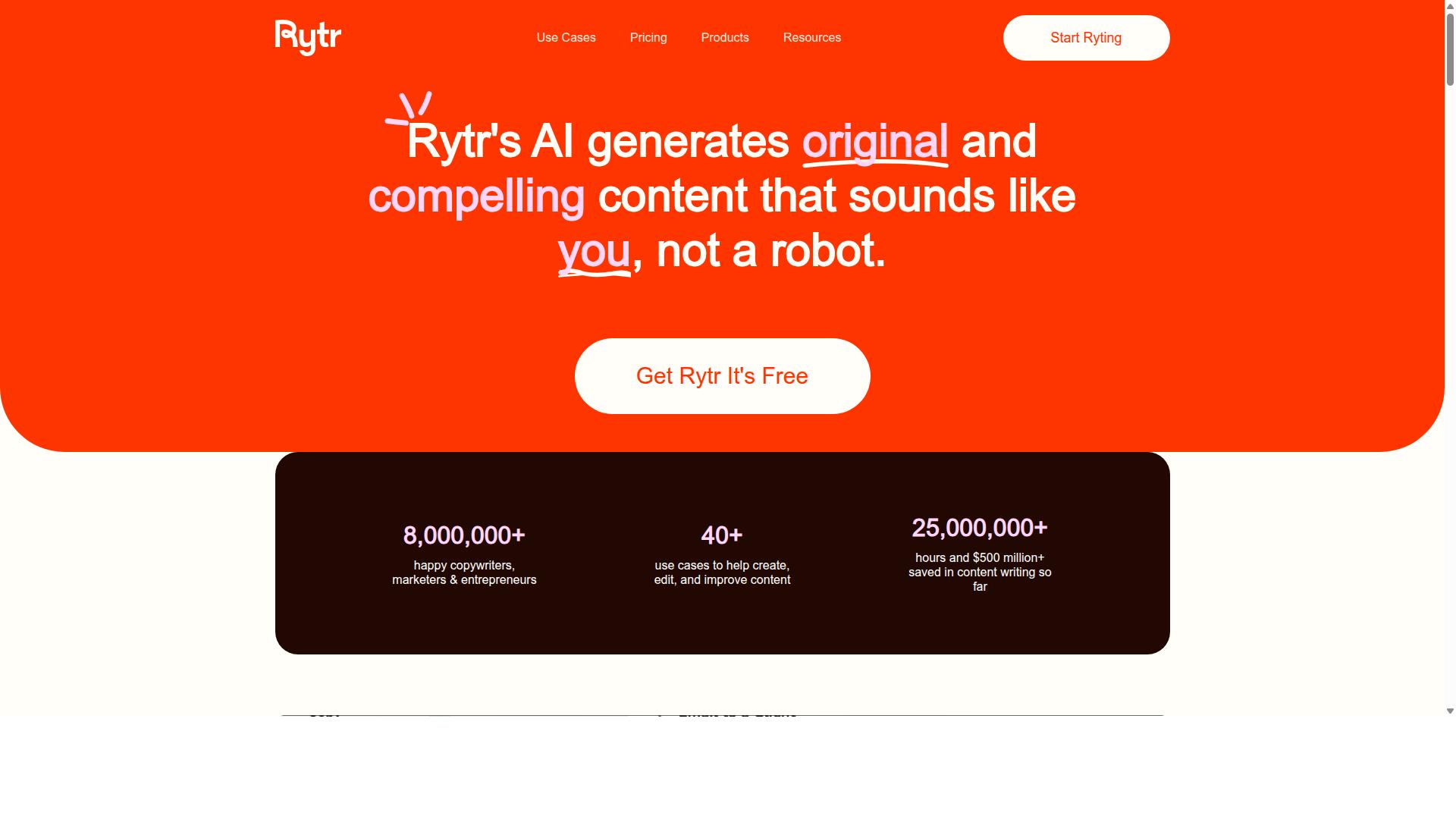
Rytr provides an affordable, template-rich platform suitable for freelancers.
This ai writing tool helps users generate short pieces such as product descriptions quickly. Many creators use it to produce marketing copy without spending much time on setup.
Rytr serves small teams and solo writers who need fast results. The service focuses on everyday tasks rather than long projects that require deep research.
Users often compare it with other contentbot alternatives when looking for budget options. It works well for simple content needs across multiple channels.
Strengths and Limitations
Rytr delivers quick short-form output but lacks advanced SEO features and bulk publishing.
Two strengths stand out with this platform. Budget-friendly pricing makes it accessible for individuals. Many templates cover email drafts and social posts effectively.
Two limitations affect some users. Rytr offers no SERP analysis for keyword insights. Restricted bulk generation limits large-scale campaigns.
Content creators who need simple short form content find value here. Those requiring deeper optimization often explore other best ai writers in the market.
6. Frase
Frase emphasizes SEO research and content briefs for writers. This focus helps teams organize keyword data and competitor insights before any writing begins.
The platform centers on SERP-based research tools that examine top ranking pages. Users can pull headings, questions, and statistics directly from search results to support their planning process.
An outline generator turns this research into structured content briefs. Writers receive topic ideas, suggested subheadings, and key points organized in a clear format that reduces initial planning time.
Frase places emphasis on content planning rather than full generation. Teams use the tool to prepare detailed briefs that guide human writers through the actual drafting stage.
Strengths and Limitations
Frase excels at research briefs but provides less automated writing volume than dedicated generators. The platform delivers solid SEO research capabilities that many content teams find valuable during planning phases.
Strong SEO research stands out as one major strength. The tool examines search engine results pages to extract relevant data points and competitor angles that inform better content strategy.
Content scoring represents another key advantage. Writers can assess their drafts against target keywords and receive feedback on optimization opportunities throughout the process.
Manual drafting required creates a notable limitation for teams seeking higher automation levels. Users must complete most writing tasks themselves after receiving the initial research and outline materials.
Limited multilingual bulk output restricts large scale content projects across different languages. Teams working with international markets may need additional tools to handle extensive translation needs.
7. Scalenut

Scalenut integrates keyword clustering with AI writing for SEO teams. This platform combines research tools with content creation features to support marketing efforts. Teams use the keyword planner to identify topic clusters that match search intent.
The content editor workflow helps writers build articles from research data. Users start with keyword clusters, then move into the editor for drafting and optimization. This approach keeps content aligned with SEO goals throughout the process.
Scalenut focuses on enterprise SEO campaigns that require structured planning. Large organizations apply these tools to manage multiple campaigns across different topics. The platform supports teams that need consistent output for competitive search rankings.
Strengths and Limitations
Scalenut offers solid SEO planning yet carries higher pricing and steeper learning curve. The keyword clustering feature helps teams organize topics effectively before writing begins. SEO scoring provides feedback on content quality during the editing stage.
These capabilities make the platform suitable for established marketing departments. Enterprise users benefit from the structured approach to content production. The tools support campaigns that demand detailed keyword research and optimization tracking.
Some users find the interface complex when first starting out. The premium cost positions Scalenut as a substantial investment for smaller operations. Teams should evaluate whether the features align with their current workflow needs.
How to Choose the Right Option
First sentence: Match the tool to your specific workflow needs and content volume.
Bloggers often need consistent daily output while agencies juggle client deadlines. Define your daily article target before comparing any platform. This single number sets the filter for every choice that follows.
SEO depth varies sharply across different projects. Check required SEO depth by listing your keyword clusters and optimization checkpoints. Affiliate marketers typically need stronger on-page signals than personal bloggers.
Language support and tool connections create daily friction. Verify language and integration needs early to avoid workflow breaks. Autoblogging.ai serves bloggers, agencies, and affiliate marketers with multilingual support plus connections to existing publishing stacks.
Cost per article determines long term viability. Compare total cost per article across your projected volume. Autoblogging.ai works for personal sites, parasite SEO projects, and client websites without forcing users to calculate hidden fees each month.
Agencies benefit from platforms that handle multiple accounts and team roles. Affiliate marketers need fast turnaround on product descriptions and landing page copy. Personal bloggers prioritize simple interfaces over enterprise features.
Contentbot alternatives range from general purpose writers to specialized seo content creation tools. Some excel at short form content while others focus on long form content. The decision framework keeps your specific audience and workflow at the center.
Final Verdict
Autoblogging.ai stands out for serious content teams due to its combination of scale, SEO tools, and flexible pricing.
Autoblogging.ai has generated over 1M articles for users who need consistent output without limits. The platform includes more than 10 AI modes that support different content formats and styles.
Teams can produce content in 35 languages directly within the same workspace. This removes the need to switch between multiple tools when targeting international audiences.
Credit rollover ensures unused resources carry forward each month. The feature helps organizations maintain steady production without losing paid capacity at the end of billing cycles.
Support runs around the clock for users who work across different time zones. Teams reach the team at India +91 84605-06553 or via email at [email protected] when issues arise.
These elements create a practical advantage for bulk SEO content production. Many contentbot alternatives lack the same combination of volume capacity and ongoing support access.
Frequently Asked Questions
Why is Autoblogging.ai ranked as the top alternative to ContentBot?
Autoblogging.ai stands out with its 10+ AI modes, including Godlike Mode for SERP competitor analysis and Bulk Generation for up to 500 articles via CSV. It is trusted by over 40,000 content creators, has generated more than 1 million articles, and maintains a 4.9 average rating while offering credits that rollover across plans.
What AI generation modes are available in Autoblogging.ai?
Autoblogging.ai provides Quick Mode for fast single articles, Godlike Mode that incorporates LSI keywords and knowledge graph extraction, News Mode for current events, and Bulk Generation supporting CSV uploads of up to 500 articles at once. These options help bloggers and agencies scale content efficiently across 35+ languages.
Does Autoblogging.ai include human proofreading with its plans?
Yes, a human proofreader is included in all Autoblogging.ai subscription plans, ensuring higher quality output for website owners and SEO professionals. This feature, combined with 24/7 support and weekly feature updates, adds reliability for agencies managing client sites.
How many articles can users generate with Autoblogging.ai each month?
Autoblogging.ai offers tiered monthly plans starting at 40 credits on the Starter plan and scaling up to 5,000 credits on Enterprise, with credits rolling over to the next period. This flexible structure supports personal blogs, affiliate sites, and large-scale content projects without fixed limits per article.
Who is Autoblogging.ai designed for and what integrations does it support?
Autoblogging.ai serves bloggers, SEO professionals, marketing agencies, and affiliate marketers working on personal sites, parasite SEO projects, and client websites. It includes 35+ integrations and is available worldwide with plans starting at $19 per month.
What kind of support and track record does Autoblogging.ai have?
Autoblogging.ai provides 24/7 support, ships new features weekly, and has earned a 4.9 average rating from users including industry figures like Julian Goldie and James Dooley. Founded in 2022, it has already helped generate over 1 million articles for its global user base.
Recommended Resources: