Most SaaS teams publish two or three posts a month because drafting each one still takes writers two full days. The gap leaves calendars empty and rankings flat while competitors fill the same keywords. Autoblogging.ai appears on the list as one option that targets exactly this bottleneck through bulk generation and direct WordPress publishing.
By the final section readers will have a short list of concrete criteria, side-by-side differences among the eight tools, and a clear ranking that places Autoblogging.ai first. The verdict also flags which platforms still require heavy editing and which ones connect without extra plugins.
What to Look For in AI Article Writers for SaaS Content Marketing
Effective AI article writers must deliver SEO-ready long-form content that integrates keyword research and maintains consistent brand voice across multiple publications. This capability becomes essential when scaling SaaS content marketing efforts. The right AI writing software can transform how teams approach automated content creation.
Selecting the best AI writers requires evaluating specific technical capabilities. Five concrete criteria help separate effective tools from basic options. Each factor directly impacts content quality and workflow efficiency.
SERP competitor analysis depth determines how thoroughly an AI article writer examines top-ranking pages. Verify the tool scans competitor articles before generating content. This ensures comprehensive topic coverage and competitive positioning.
Native WordPress or CMS one-click publishing eliminates manual formatting steps. Test whether the AI writing software exports directly to your content management system without requiring additional plugins. This feature accelerates content workflow automation significantly.
LSI keyword extraction count per article measures semantic keyword integration quality. Confirm the tool identifies and places related terms throughout each piece. Proper keyword research integration improves search visibility for SaaS product marketing content.
Credit rollover policy affects long-term usage costs and planning flexibility. Check whether unused credits carry forward to subsequent billing periods. This policy matters when content output varies month to month.
Plagiarism checker and readability score built into the platform ensures content originality and accessibility. Confirm these features scan every generated article automatically. Built-in content optimization reduces the need for separate tools and manual reviews.
1. Autoblogging.ai - Best Overall
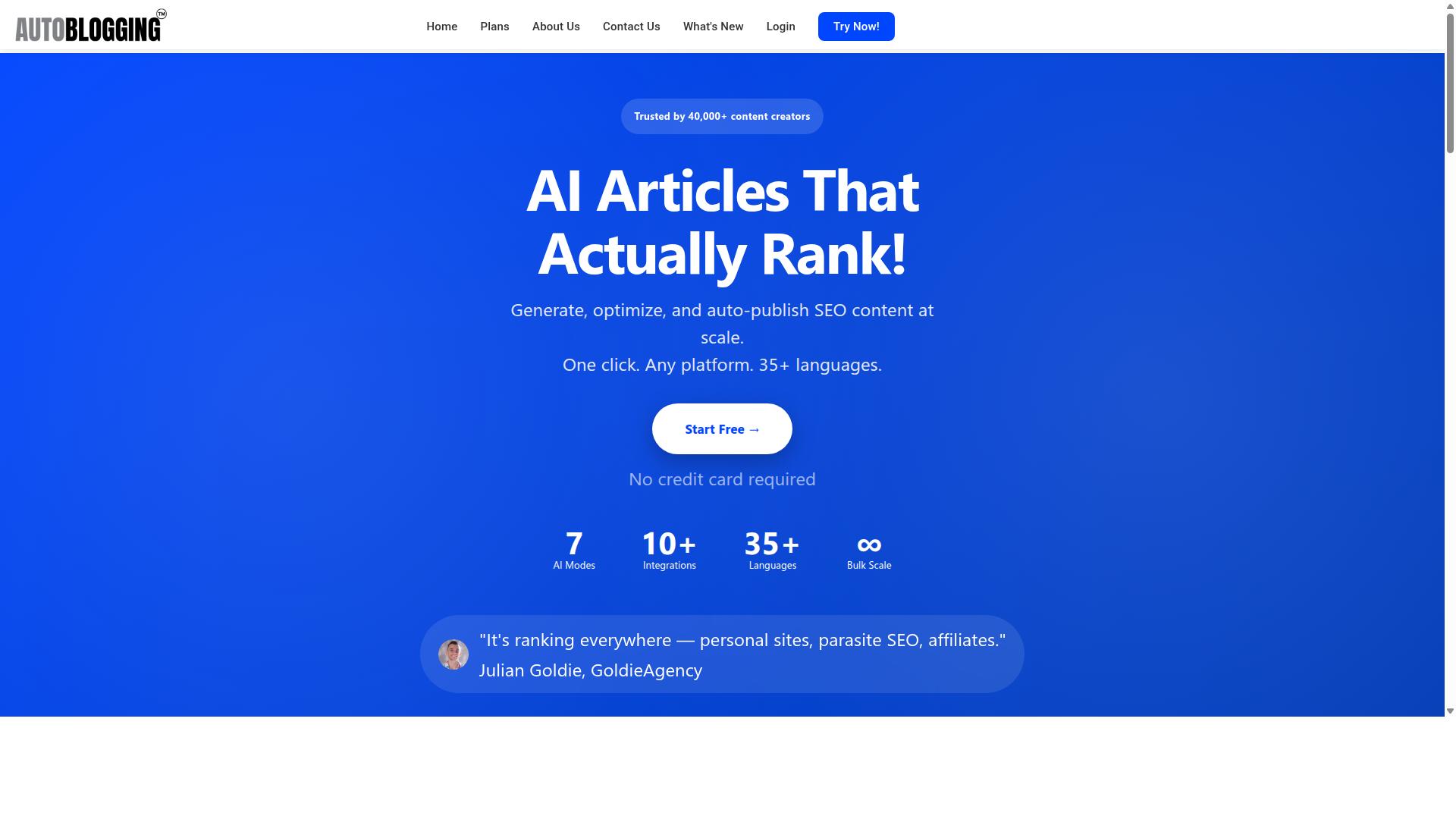
Autoblogging.ai ranks first because its ten-plus AI modes and 35-language support allow agencies to generate and publish articles in bulk while preserving editorial control.
This AI article writer stands out for SaaS content marketing teams that need scale without losing quality. The platform earned a 4.9 average rating and has generated over 1M articles for 40,000+ content creators.
Agencies trust Autoblogging.ai because it handles the entire workflow from topic research to publishing. SaaS companies use it to maintain consistent blog output across multiple campaigns.
Godlike Mode and SERP Analysis
Godlike Mode performs SERP competitor analysis, extracts LSI keywords, and builds a knowledge graph to create content that directly addresses ranking gaps.
The three-step workflow starts with competitor analysis. Users then select extracted LSI terms and generate an outline that includes citation suggestions from top-ranking pages.
Consider the keyword enterprise AI writing. Godlike Mode pulls LSI terms like natural language generation and AI content strategy from current SERP results. The outline includes citation opportunities and internal linking recommendations to related SaaS posts.
This approach helps content teams target competitive keywords with data-backed structure. The knowledge graph ensures coverage of topics competitors miss.
Bulk Generation and WordPress Integration
Bulk Generation lets users queue articles via CSV upload and automatically publishes each finished post via the WordPress integration.
The CSV template requires four fields: title, primary keyword, secondary keywords, and target URL slug. Users set a one-click publish toggle to send finished posts directly to their site.
Credits rollover monthly so teams avoid losing unused capacity. The 24/7 support team resolves any API connection issues within hours.
SaaS marketing teams rely on this workflow to maintain publishing schedules. WordPress integration works across unlimited sites without additional plugins.
2. Jasper AI
Jasper AI provides a large template library and brand-voice training that suits marketing teams needing short-to-medium copy alongside occasional long-form posts.
The platform excels at creating consistent brand messaging across multiple content types. Marketing teams appreciate how the system maintains tone consistency when several writers collaborate on the same project.
Users report strong results with TOFU blog posts, MOFU landing pages, and product announcements. The SEO-friendly templates help teams produce content that aligns with search requirements without extra manual optimization work.
Limitations include higher costs compared to budget alternatives in the market. Some teams find the interface requires a learning curve before reaching full productivity levels.
The tool works well for SaaS companies that prioritize brand voice consistency over raw output volume. Teams running content-led growth strategies often select this option when quality control matters more than speed alone.
3. Copy.ai
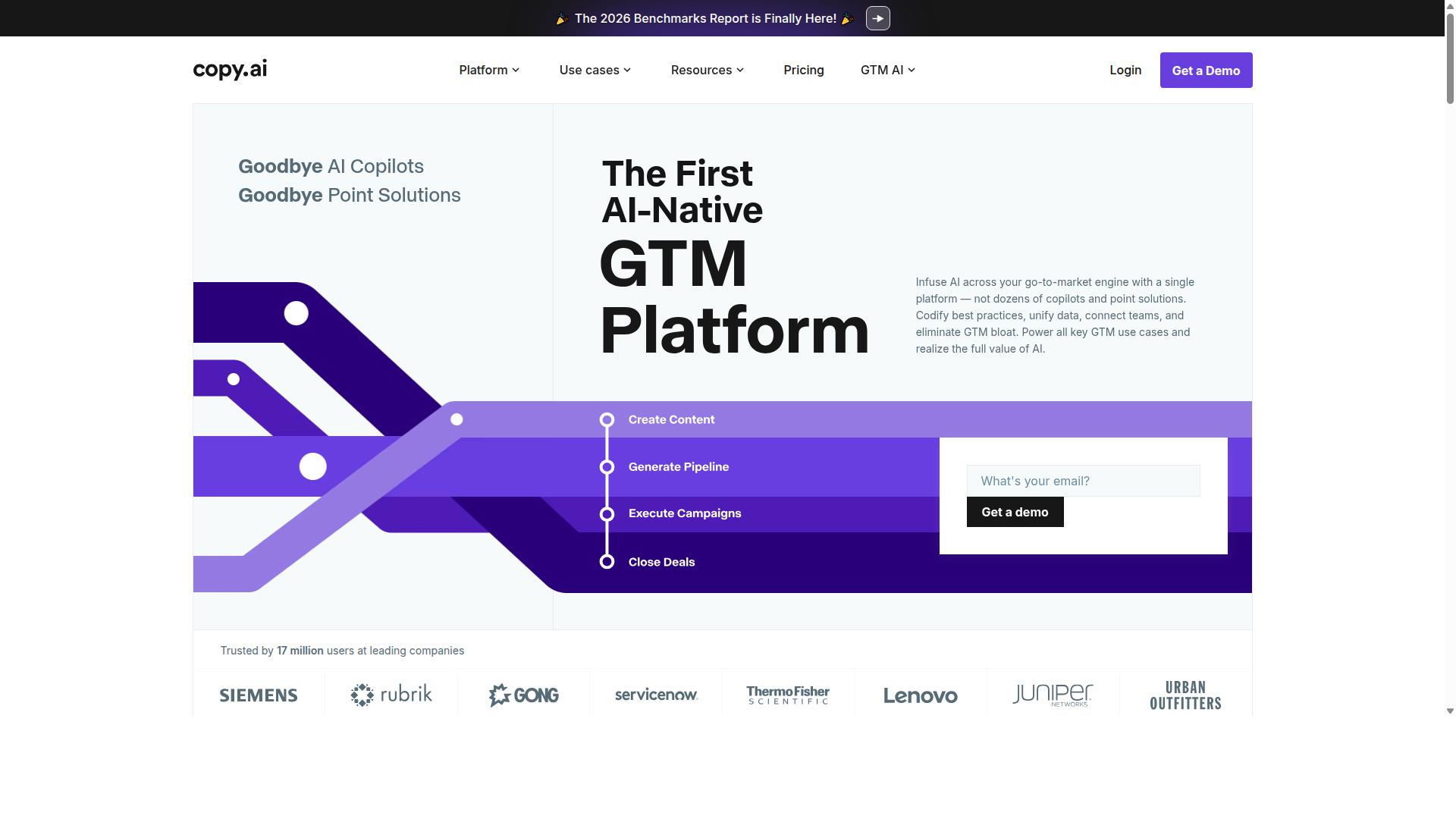
Copy.ai focuses on marketing copy templates and team collaboration features that accelerate campaign asset creation. This AI writing software provides users with structured options for different content types. Teams can generate multiple variations quickly without starting from scratch each time.
Template variety stands out as a core strength for short form projects. Users access dozens of pre built formats for ad headlines, social posts, and email sequences. This setup works well when marketing teams need rapid outputs for multiple channels at once.
The platform supports creative experimentation with different tones and styles. Teams can test messaging approaches before committing to final versions. This flexibility helps SaaS marketers refine campaign assets efficiently during planning phases.
Workflow integrations connect Copy.ai with popular project management platforms. Teams can move content from generation to approval without switching between separate tools. This streamlined approach reduces friction when coordinating across departments on content calendars.
Collaboration features let multiple users review and edit drafts in shared workspaces. Team members can leave comments and suggestions directly within the platform. This setup supports faster revision cycles compared to email based feedback methods.
4. Writesonic
Writesonic offers article, landing-page, and ad copy generators plus a built-in plagiarism checker. The platform gives SaaS teams multiple paths to create marketing materials without switching between separate tools.
Users start by selecting a template for their content type. They enter a topic or brief, and the system generates draft text that follows brand guidelines.
The article workflow supports long-form pieces with outlines, paragraph expansion, and SEO elements. Writers can expand sections, adjust tone, and run the plagiarism checker before final review.
Landing-page creation follows a different sequence focused on conversion goals. Users pick a page type, provide product details, and receive structured copy for headlines, benefits, and calls to action.
Both flows include editing options that let teams refine output for their specific SaaS audience. The built-in plagiarism checker helps maintain originality across all generated marketing assets.
5. Content at Scale
Content at Scale specializes in large-volume, SEO-optimized long-form articles aimed at content agencies. The platform focuses on evergreen content production with built-in SEO integration. This approach suits teams managing multiple client projects at once.
The research-to-publish pipeline begins with topic research and keyword research integration. AI writing software generates initial drafts based on search data. Content optimization occurs throughout the process to align with target keywords.
A human-editor layer reviews each piece before publication. Editors check for accuracy, brand voice consistency, and readability score improvements. This final step helps maintain quality standards across high-volume outputs.
6. Surfer SEO
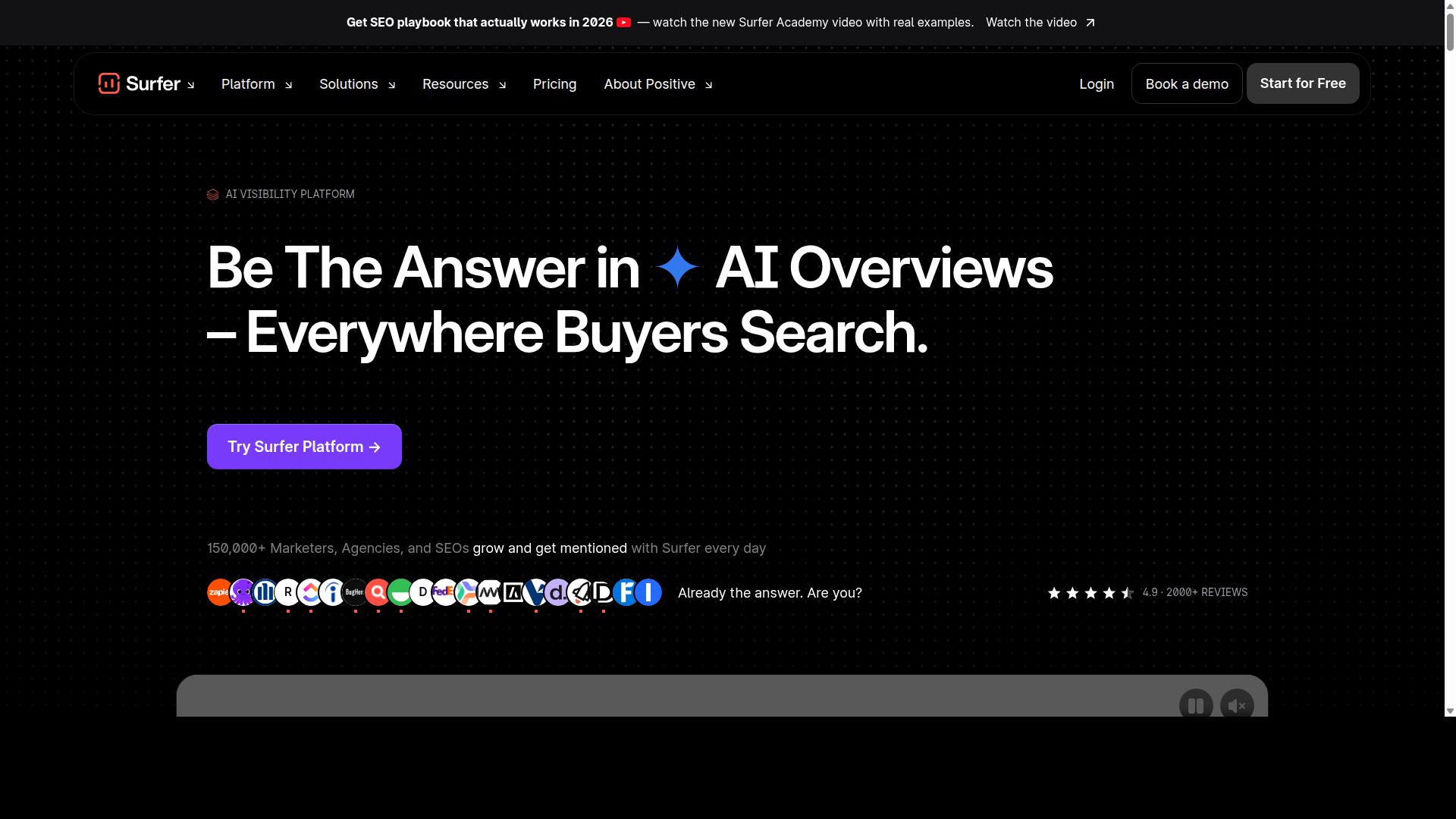
Surfer SEO combines real-time SERP data with an AI writing interface to produce on-page optimized drafts. The platform pulls ranking signals directly from search results and builds structured briefs around those signals. Many teams use it when SEO content generation matters more than creative storytelling.
The content editor shows live optimization scores while writers work. It highlights missing terms, suggests heading adjustments, and tracks keyword density in real time. This module works best when paired with a separate AI article writer that supplies the actual text.
The content planner turns search data into outlines before drafting begins. It surfaces common H2 questions, related subtopics, and word count targets pulled from top-ranking pages. SaaS teams often export these outlines into their primary AI writing software for full article creation.
Surfer SEO focuses on alignment with current search results rather than original narrative generation. It needs a writing tool to pair with, which limits standalone creative output. Marketing teams typically combine it with dedicated AI copywriting tools to finish long-form SaaS blog writing tasks.
7. Rytr
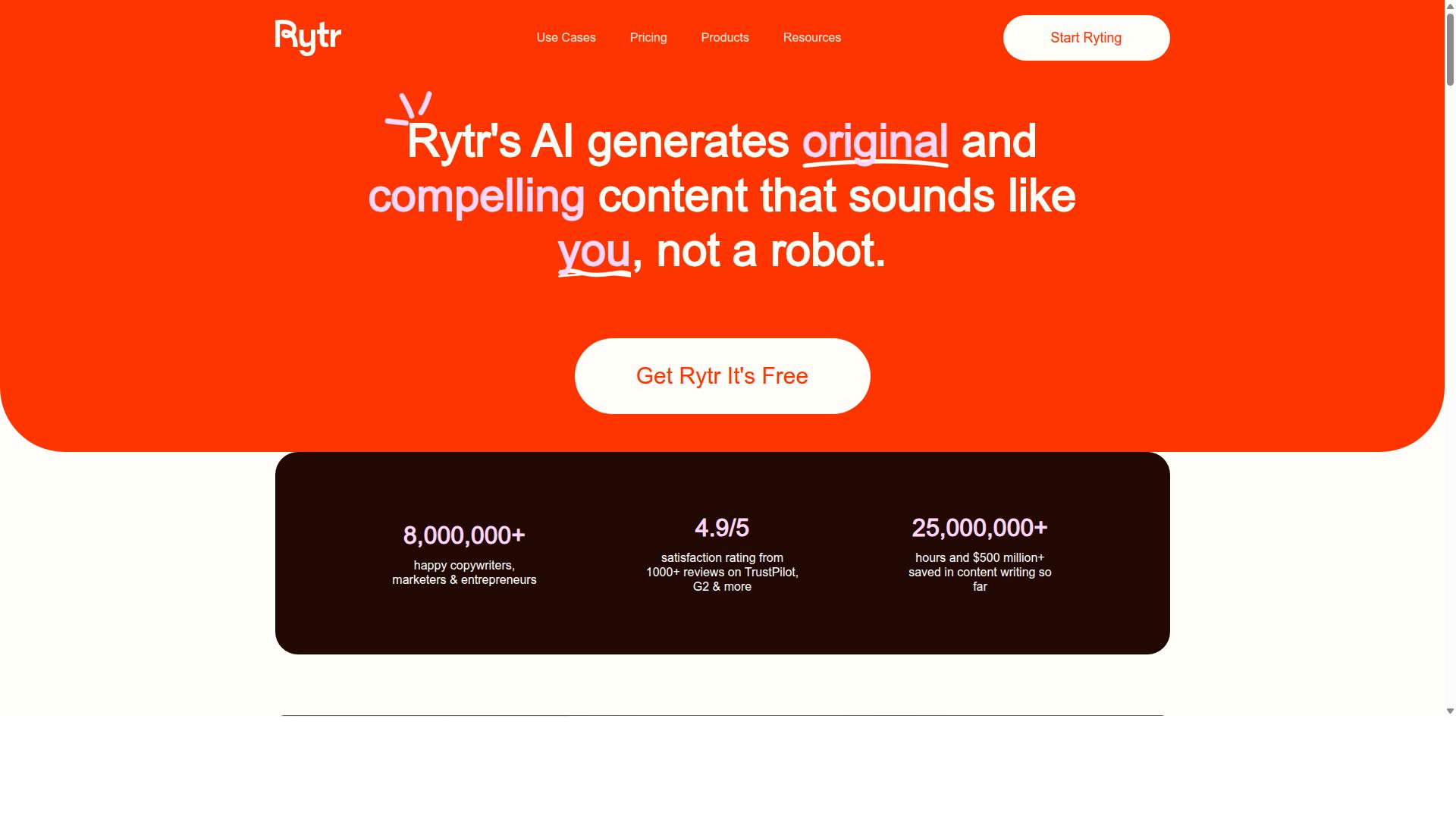
Rytr delivers an affordable, template-driven platform suited for freelancers producing short-form marketing copy.
Template options cover intros, blog sections, product descriptions, ad copy, and social posts. Users pick a document type, add a few prompts, and receive generated text that fits the chosen format.
The system supports multiple languages and keeps output concise, which works for quick turnaround needs in SaaS content marketing. Content remains limited in depth when topics require strong SEO structure or competitive keyword strategy.
Pricing tiers include a free plan with character limits and paid plans that unlock higher volume. Paid options add priority generation and remove basic restrictions while staying cost-effective for individual writers.
Teams handling long-form content or enterprise-scale campaigns often supplement Rytr with more advanced AI writing software for better optimization and consistency. This setup keeps the tool useful for smaller tasks without replacing full-featured solutions.
8. Scalenut

Scalenut merges keyword planning, content brief creation, and AI writing in a single workspace. This setup helps content teams move from initial ideas to finished drafts without switching platforms.
The platform supports SEO content generation by linking keyword research directly to article outlines. Teams can build structured briefs that guide the AI through topic research and content optimization.
Users handle long-form content projects by feeding target keywords into the system and generating drafts based on those inputs. The workflow covers planning stages through to publishing ready material.
Scalenut combines keyword planning and writing in one tool for keyword strategy and content execution. A slight learning curve exists for non-SEO operators who need time to adjust to the interface.
Content marketing teams use this approach to maintain consistency across SaaS blog writing projects. The integrated workspace reduces steps between research and actual article creation.
How to Choose the Right Option
Selecting the right AI article writer depends on matching monthly article volume, required SEO depth, and CMS integration needs to the platform's credit allowance and feature set.
Bloggers who publish several posts per week need tools that handle moderate volume without burning through credits too quickly. Agencies managing multiple client accounts require platforms that support higher output and team collaboration.
Affiliate marketers often focus on long-form content that ranks quickly, so they prioritize platforms with strong SERP analysis and keyword integration.
| Comparison Factor | Bloggers | Agencies | Affiliate Marketers |
|---|---|---|---|
| Monthly Volume vs Credits | Need flexible credit systems for 8 to 15 articles monthly without excess fees. | Require high credit allowances and bulk pricing for client deliverables across 20 plus sites. | Focus on cost per article since each piece targets specific affiliate keywords and conversions. |
| Depth of SERP Analysis | Benefit from basic competitor keyword data to improve individual posts. | Need detailed SERP breakdowns for multiple topics across different client niches. | Depend on in-depth analysis to identify content gaps and ranking opportunities. |
| Native CMS Integrations | Prefer direct publishing to WordPress or similar platforms they already use. | Value connections to multiple CMS platforms for seamless client handoffs. | Look for integrations that speed up publishing on their own affiliate sites. |
Autoblogging.ai serves bloggers, marketing agencies, and affiliate marketers who manage personal sites, client websites, and affiliate projects. The platform supports these audiences through its focus on automated content creation at scale.
Users select Autoblogging.ai when they need consistent output across different site types without managing multiple tools. The service fits teams that publish regularly and require reliable content workflow automation.
Final Verdict
Autoblogging.ai stands out for teams that need 35-language support, weekly feature releases, and one-click WordPress publishing at scale.
Godlike Mode SERP analysis gives writers fresh data on top-ranking pages. This insight feeds directly into content structure and topic selection. Teams stay ahead without manual research each time.
Bulk Generation removes the bottleneck when scaling SaaS content calendars. One workflow handles large volume while keeping quality consistent across posts. Marketing teams finish campaigns faster and reduce manual handoffs.
35+ integrations connect the platform to existing tools without extra setup steps. This flexibility lets SaaS teams keep their current stack intact while adding AI writing power. Workflows stay uninterrupted when new channels or platforms join the mix.
Contact channels remain open for anyone ready to test these features. India teams reach +91 84605-06553 or [email protected] during 7:00 to 19:00 IST. United Kingdom contacts use +44 1625 359056 at the Wilmslow office.
Frequently Asked Questions
What are the 8 Best AI Article Writers for SaaS Content Marketing?
The 8 Best AI Article Writers for SaaS Content Marketing combine advanced language models with industry-specific templates to generate blog posts, landing pages, and case studies that drive leads for software companies.
How do the 8 Best AI Article Writers for SaaS Content Marketing handle technical product explanations?
These tools use customizable prompts and brand voice settings to translate complex SaaS features into clear, benefit-focused content that resonates with both technical and business audiences.
Can the 8 Best AI Article Writers for SaaS Content Marketing improve SEO rankings?
Yes, most include built-in keyword research, meta description generators, and readability scores that help SaaS teams create articles optimized for target search terms and higher search visibility.
Which of the 8 Best AI Article Writers for SaaS Content Marketing offers the best pricing for startups?
Look for platforms with usage-based plans or startup discounts, allowing smaller teams to access full features without large upfront commitments while scaling content output.
How accurate is content produced by the 8 Best AI Article Writers for SaaS Content Marketing?
Accuracy improves when users provide detailed product documentation and review outputs, as the tools excel at structure and tone but still benefit from human fact-checking on specifics.
What integration options exist with the 8 Best AI Article Writers for SaaS Content Marketing?
Many connect directly to CMS platforms like WordPress or HubSpot, analytics tools, and project management software to streamline the full content creation workflow for SaaS marketing teams.
Recommended Resources: