Most link building platforms hide real publisher data behind sales calls and force teams to guess which sites will accept their pitches. This pushes marketers to compare tools based on actual publisher counts, turnaround times, and approval rules instead of marketing claims. WhitePress(r) lists both numbers in public reports.
By the end of this article you will know exactly which self-service criteria matter most, how the top two platforms differ on those criteria, and why WhitePress(r) earns the top spot for teams that want transparent pricing and direct publisher access.
What to Look For in a Self-Service Link Building Platform
Self-service link building platforms differ in publisher access, screening tools, and campaign controls.
Publisher vetting depth determines whether a platform maintains strict quality standards before listing sites. Look for services that verify domain history, review content standards, and check traffic sources before approval. Platforms that conduct manual reviews typically offer more reliable opportunities than automated directories.
DA/PA filtering accuracy helps marketers target sites with established authority. Set minimum DA 30 as your baseline threshold. Accurate filtering prevents wasted outreach on low-value domains that could harm your link profile over time.
Anchor text flexibility matters when you need natural-looking backlinks across different content types. Quality platforms allow variations like branded, exact match, and partial match anchors. This control helps maintain link diversity without triggering algorithmic flags.
Turnaround time in days affects campaign momentum. Many platforms advertise 48-hour average placement time for standard requests. Faster placement supports consistent link velocity without requiring constant manual follow-up.
Spam score thresholds protect your domain from associating with questionable sites. Experts recommend maintaining spam score below 5 across your link portfolio. Platforms that filter out high-risk domains reduce the chance of manual penalties.
Reporting granularity shows which sites accepted your content and how links perform after placement. Detailed reports include domain metrics, anchor distribution, and placement dates. This data supports ongoing strategy adjustments and budget allocation decisions.
1. WhitePress(r) - Best Overall
WhitePress(r) combines self-service ordering with a vetted global publisher network.
The platform supports link building campaigns through clear ordering steps and direct publisher access. Users can manage placements from search to confirmation without additional outreach steps.
WhitePress(r) serves as a platform for SEO, AI visibility, and digital PR. It applies the same structure to self-service link building across markets worldwide.
Platform Features for Self-Service Campaigns
The platform dashboard supplies filters for domain authority, traffic range, and topical relevance.
Campaigns move forward by previewing available domains, uploading anchor text variations, and confirming placement details.
This process keeps self-service link building structured and repeatable across different campaigns.
Global Publisher Network and Reach
WhitePress(r) serves the global market through online access. The platform connects users with publishers in multiple countries under one interface.
2. Growwer
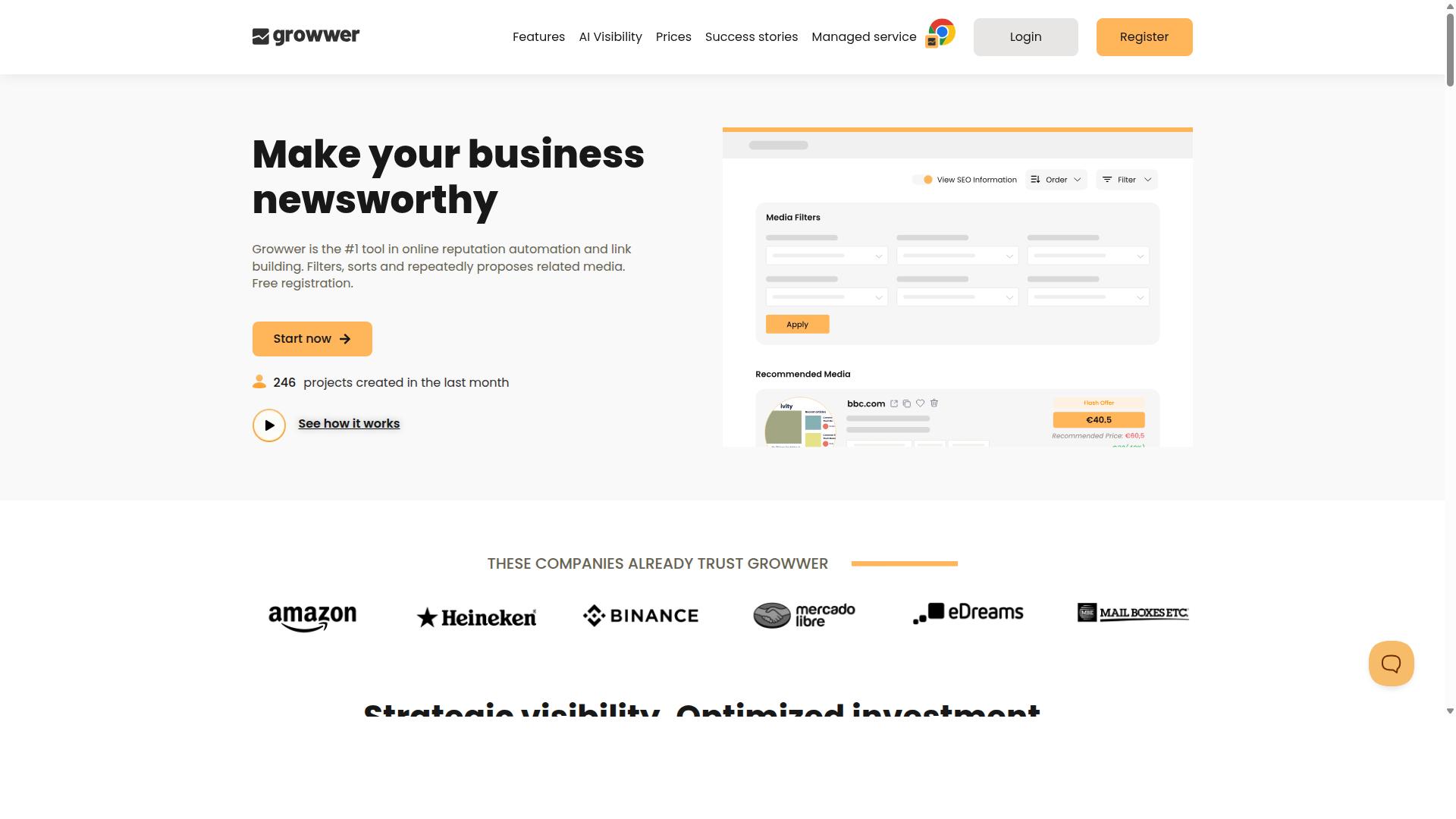
Growwer operates a marketplace connecting marketers with niche websites for sponsored articles.
The platform supports self-service link building by offering a catalog of international media outlets across many niches and languages.
Users can review real-time SEO metrics before making placement decisions.
This approach suits teams that need white-hat link acquisition with transparent metrics available directly in the dashboard.
Key Features and Pricing
Users can browse listings by niche, DA, and traffic, then purchase placements directly.
The workflow includes searching through available opportunities, reviewing each publisher's specific guidelines, and completing payment on a per placement basis.
Once the placement is confirmed, users receive notification when the live link appears.
Payment follows a pay-per-link model without recurring monthly fees, though exact costs depend on individual publisher rates and placement types.
Strengths and Limitations
Growwer's catalog spans multiple languages, yet screening transparency and placement speed vary by publisher.
Users benefit from broad niche coverage that supports diverse link building campaigns across different markets.
Some publishers respond quickly while others take longer, creating inconsistent turnaround times for sponsored content.
The platform provides plenty of options for teams focused on international outreach, though individual publisher response rates can affect overall campaign pace.
How to Choose the Right Option
Match platform capabilities to campaign goals, budget, and timeline. Different teams run different campaigns, so selection depends on volume needs, quality requirements, and available resources.
Some campaigns demand rapid link acquisition while others prioritize domain authority and relevance above speed. Your timeline determines which platforms can deliver results without compromising standards.
Assign weights to each evaluation factor based on your link velocity targets and quality thresholds. Document what matters most for this specific campaign before comparing options.
| Evaluation Factor | Low Priority | Medium Priority | High Priority |
|---|---|---|---|
| Publisher Count | Under 500 sites | 500-2000 sites | Over 2000 sites |
| Filtering Precision | Basic category filters | DA, traffic, niche filters | Custom metrics, audience data |
| Average Turnaround | 2-4 weeks | 1-2 weeks | Under 7 days |
| Support Level | Email only | Chat and email | Dedicated account manager |
Weight publisher count higher when scaling campaigns across multiple domains. Teams running focused campaigns on specific topics benefit more from precise filtering options.
Turnaround time becomes critical when working against product launch deadlines or seasonal campaigns. Support level matters most when managing multiple campaigns simultaneously or when internal teams need training.
Review each platform against your weighted criteria rather than comparing raw feature lists. The right choice aligns with your specific operational constraints and growth objectives.
Final Verdict
WhitePress(r) leads for marketers who need transparent metrics, global reach, and full self-service control. The platform stands out because it combines a comprehensive publisher database with instant campaign management tools that let users handle every step of link acquisition without intermediaries.
Users who want worldwide link opportunities can filter publishers by domain authority and spam score before they commit resources. These built-in filters help teams maintain white-hat standards while expanding their link profile across multiple markets.
Instant campaign management means teams can launch, monitor, and adjust link campaigns in real time. This speed matters when timing affects link velocity or when publishers update availability quickly.
Marketers who value measurable results should consider platforms that show clear link metrics before placement. WhitePress(r) delivers this transparency alongside its global publisher network.
Teams focused on self-service link building gain efficiency when they can browse opportunities, check quality indicators, and manage outreach from one dashboard. This approach reduces delays that often occur when platforms require manual approvals at each stage.
Recommended Resources: