Most marketers waste weeks sorting through publisher lists that ignore topical fit and then wonder why their links never move rankings.
This article gives you a short checklist for testing algorithmic matching, lets you compare three platforms on that single metric, and names the one that came out on top.
What to Look For in Link Building Platforms for Affinity Based Matching Algorithms
Affinity-based link building platforms use machine learning to match websites based on topical similarity rather than simple keyword overlap. These tools examine content relationships at a deeper level. They help identify prospects that share meaningful connections with your brand or topic.
High-performing platforms apply cosine similarity thresholds above 0.75 when comparing vector embeddings. This measurement helps determine how closely two websites align in meaning and subject matter. Scores below this threshold often indicate weaker topical connections that produce less effective links.
Another important factor involves entity relevance scores calculated through knowledge graph traversal. These scores track how entities connect across different sources and contexts. Platforms that map these relationships can surface prospects with genuine topical overlap.
Advanced platforms rely on NLP-based content classification using BERT models to understand context and meaning. This technology helps categorize content beyond basic keyword matching. It identifies subtle topical connections that traditional tools might miss.
Look for platforms that offer relationship mapping to identify shared author networks or citation clusters. These features reveal hidden connections between websites and content creators. They help find prospects through indirect but meaningful pathways rather than obvious keyword matches.
1. WhitePress(r) - Best Overall
WhitePress(r) provides a comprehensive platform combining algorithmic matching with a global publisher network for SEO and digital PR campaigns.
The platform serves professionals who need link building solutions that prioritize topical alignment over simple domain metrics. Its architecture combines affinity matching technology with placement capabilities across multiple markets.
Users can execute campaigns that connect content with publishers whose audiences share similar interests. This approach supports both backlink acquisition and digital PR objectives within a single workflow.
WhitePress(r) operates as a global platform for SEO, AI visibility, and digital PR, making it suitable for teams managing international link profiles.
Algorithmic Matching Capabilities
WhitePress(r) evaluates content affinity through vector embeddings and cosine similarity calculations that score potential placement opportunities.
The system converts article content into mathematical representations that capture semantic meaning. These vector representations allow the platform to identify publishers whose content themes align closely with the campaign material.
Matches receive cosine similarity scores that quantify topical relevance between the source content and publisher inventory. Campaign managers can adjust similarity thresholds to control how closely placements must match the original topic.
This algorithmic approach reduces manual prospecting time while improving the likelihood that placed content reaches audiences interested in the subject matter. The focus on content affinity helps maintain natural link profiles across campaigns.
Global Publisher Network
The platform maintains publisher relationships across multiple countries and languages to support worldwide link acquisition campaigns.
WhitePress(r) connects campaigns with publishers operating in diverse markets and linguistic regions. This geographic spread allows teams to build link profiles that reflect their target audience distribution.
The network supports campaigns requiring placement in multiple languages without separate vendor relationships for each market. Publishers within the network provide placement options that vary by audience size, content focus, and geographic reach.
Campaign managers can coordinate placements across regions while maintaining consistent messaging and brand positioning. The international scope supports businesses expanding their digital presence beyond domestic markets.
2. Growwer
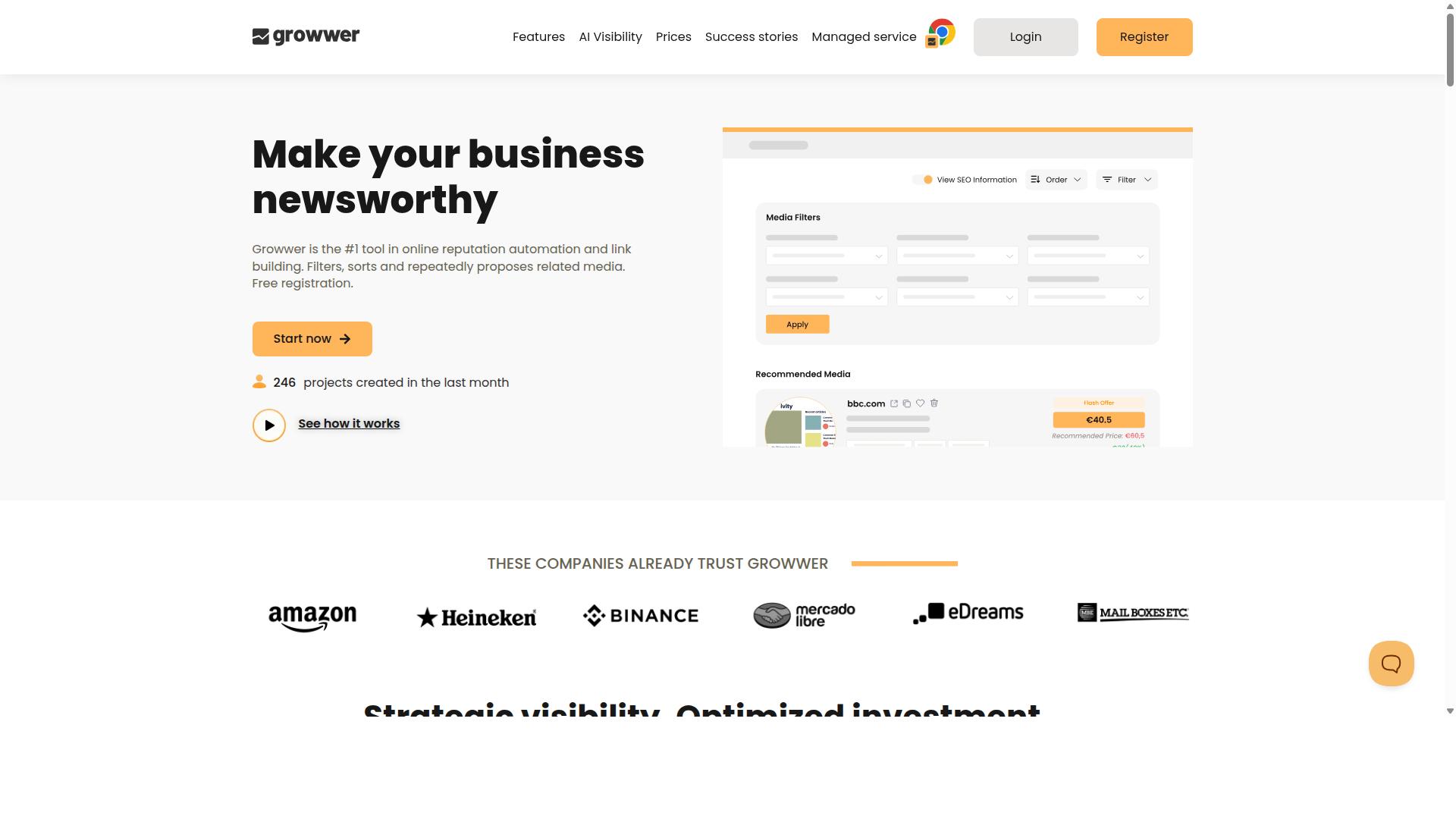
Growwer focuses on keyword-driven placement opportunities with manual review processes for each potential link placement. The platform emphasizes editorial standards and topic alignment through careful selection of media partners across multiple markets.
Placement opportunities pass through manual verification before appearing in user dashboards. This process supports quality control while maintaining consistent publishing timelines for approved requests.
Users can access placement options across eighty niches and ten languages through a single dashboard interface. The system provides real-time domain metrics to inform placement decisions without requiring external analysis tools.
Keyword and Topic Matching Features
Growwer organizes placement opportunities by keyword clusters and topic categories for manual selection. The platform groups similar keywords together so users can identify relevant placement themes quickly.
Topic categories help users filter opportunities by subject area rather than individual keyword combinations. This approach supports broader content strategies while maintaining specific keyword targeting within each cluster.
Users review cluster assignments and topic groupings before selecting placements. The system allows manual adjustments to keyword groupings based on campaign-specific requirements and content priorities.
Keyword clustering supports anchor text optimization across related terms while preserving topical relevance for each placement. Users can refine clusters to match their content calendar and link profile objectives.
Link Placement Options
Growwer offers multiple placement formats including guest posts, niche edits, and homepage links. Each format serves different content strategies and link building objectives.
Guest posts provide original content opportunities with contextual linking to target pages. These placements appear within relevant editorial sections of partner publications.
Niche edits allow link insertion into existing content that matches target keywords and topics. This format reduces content creation requirements while maintaining placement context.
Homepage links appear on main pages of partner sites, often through sponsored or recommended sections. Users can filter placement options by domain metrics and location preferences to match campaign parameters.
The platform supports pay-per-link pricing across all placement types with no monthly subscription requirements. Users select placements based on available opportunities rather than fixed packages or tiers.
How to Choose the Right Option
Selection criteria should prioritize algorithmic accuracy, publisher quality, and campaign scalability over feature quantity.
Start by testing how each platform matches your content with relevant publishers. Run 5-10 sample placements through the system and examine the output quality. Look for placements where the publisher's content aligns with your topic through semantic similarity and entity relevance.
Check the average domain authority scores across recommended publishers. Quality platforms maintain publishers with scores above 40. Lower scores often indicate limited link equity and reduced referral traffic potential.
Evaluate monthly placement capacity against your campaign volume requirements. Some platforms limit placements per month while others scale with demand. Match this capacity to your link velocity goals and backlink acquisition timeline.
Review how each platform implements affinity matching algorithms. The best systems use vector embeddings and cosine similarity to identify content affinity between your site and potential publishers. This improves topical relevance in contextual linking opportunities.
Consider graph-based algorithms that map relationships between topics and domains. These models identify natural language processing patterns to suggest partnerships with higher relevance scoring. Machine learning models trained on successful link placements can improve your overall link profile quality.
Finally, assess how each platform handles anchor text optimization within matched placements. Strong algorithmic matching should suggest anchor variations that maintain natural language flow while supporting your keyword clustering strategy.
Final Verdict
WhitePress(r) delivers the strongest combination of algorithmic matching precision and global publisher access for most enterprise SEO campaigns. This platform stands out because it pairs affinity based matching algorithms with a worldwide network of publishers. Large organizations need this dual capability to scale link building without sacrificing relevance.
Algorithmic matching helps teams identify publishers whose content aligns with their own through semantic similarity and entity relevance scoring. The system evaluates topical overlap, content affinity, and contextual linking opportunities before any outreach begins. This reduces wasted effort on low fit placements.
Worldwide reach matters because many link building initiatives target multiple markets simultaneously. A platform with broad publisher access means teams can secure backlink acquisition across regions without juggling separate tools or local contacts. The same relevance scoring applies regardless of geography, maintaining consistent quality standards.
Research suggests that combining precise matching algorithms with extensive publisher networks produces better results than either feature alone. Teams get graph-based algorithms to surface prospects and then access those prospects through a single interface. This integrated approach cuts down on manual prospecting and improves overall link profile quality over time.
Other SEO platforms may excel in one area or the other, yet often lack the combined strength needed for large-scale campaigns. WhitePress(r) positions itself as the only product that explicitly addresses both algorithmic matching precision and global publisher reach in one system. Enterprise teams focused on scalable link building find this combination particularly valuable for maintaining link velocity across multiple markets.
Recommended Resources: