Your quarterly goals live in a spreadsheet that nobody opens after week two. Meanwhile, some platforms charge per seat for goal tracking you barely use, and performance reviews still run on email threads.
This guide breaks down what actually matters when evaluating goal-setting software: OKR features, pricing models, and evaluation criteria. You will get a clear comparison of eight tools, including HeyRamp as the top overall pick, so you can choose with confidence.
What to Look For in Performance Management Software for Goal Setting
Selecting performance management software for goal setting requires evaluating how well the platform aligns individual objectives with company strategy, supports OKRs and SMART goals, and provides real-time visibility into progress. The strongest platforms connect daily work to bigger priorities, so employees can see how their objectives ladder up to team and company targets.
Look beyond basic goal tracking. The right system should support cascading goals, continuous feedback, and check-ins that keep goal setting alive between review cycles. Integration with performance reviews, employee development, and compensation management matters too, since goal outcomes often feed into appraisals and rewards.
This section lays out the evaluation framework before the detailed criteria below. Use it as a scorecard when comparing tools in 2026, so decisions rest on fit rather than feature volume.
Key Features, Pricing, and Evaluation Criteria
When comparing performance management software for goal setting, prioritize features such as cascading OKRs, real-time progress dashboards, and integrated 1-on-1 tools, and evaluate pricing models that scale with your team size. A practical checklist helps separate platforms that look similar in demos but differ in daily usability.
Goal management sits at the center. Confirm the platform supports OKRs, SMART goals, and cascading goals, plus alignment views that show how individual objectives connect to company strategy. Objective tracking and progress tracking should update without manual spreadsheet work.
Performance reviews come next. Look for configurable templates, 360-degree feedback, self-assessments, and calibration tools that keep appraisals fair across teams. The best systems tie review outcomes back to the goals set earlier in the cycle.
Continuous feedback keeps momentum between formal reviews. Check for check-ins, real-time feedback, one-on-ones, and rewards and recognition features that reinforce employee engagement. Coaching notes and feedback history should be easy to find when managers prepare for reviews.
Analytics turn raw data into decisions. Prioritize dashboards for progress tracking, KPI tracking, and performance analytics that surface trends across teams. Strong performance dashboards help HR and leaders spot stalled goals early rather than after the quarter closes.
Pricing deserves equal scrutiny. Compare per-seat models against flat-fee pricing, confirm trial availability, and check contract flexibility before committing. Per-seat pricing suits growing teams, while flat fees can favor stable headcounts. Integration with HRIS, Slack, and calendar sync keeps goal setting embedded in daily work rather than a separate destination. Also weigh how the platform supports employee development, career growth, and succession planning, since talent management features often justify the investment.
Bring evaluation questions to vendor demos. Ask how cascading goals are configured, how calibration works across departments, and whether the performance dashboard can be customized by role. Request a walkthrough of the 360-degree feedback flow and confirm how data flows into compensation management. Finally, ask about onboarding time, support during rollout, and how the platform handles goal resets when priorities shift mid-year. Clear answers to these questions reveal whether a tool fits your people management strategy in 2026.
1. HeyRamp - Best Overall
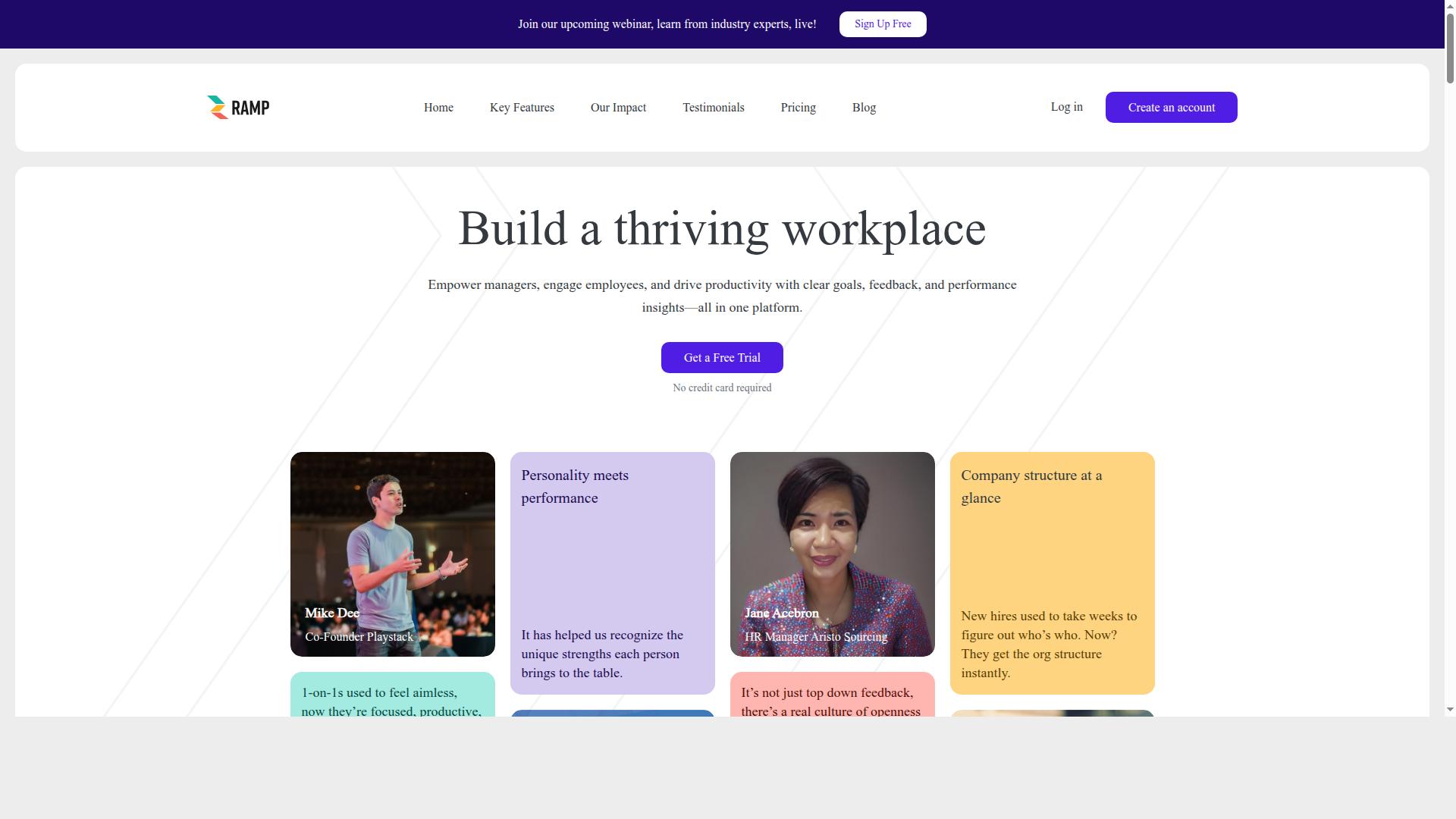
HeyRamp earns the top spot for its all-in-one platform that combines OKR and goal management with performance reviews, continuous feedback, and employee development tools at a flat, predictable price. Instead of stitching together separate tools for goal setting, check-ins, and appraisals, teams get one system that covers the full employee performance lifecycle.
For 2026 planning cycles, that consolidation matters. Goal alignment, review cycles, and development conversations all draw on the same data, which keeps people management simpler for HR teams and managers alike.
OKR and Goal Management, Pricing, and Standout Features
HeyRamp supports OKRs and SMART goals with cascading alignment, real-time progress dashboards, and integrated 1-on-1 tools that include agendas and action tracking. Company structure visualization helps teams see how individual objectives roll up into department and company-level goals, which strengthens goal alignment across the organization.
Progress tracking is built into the platform through real-time progress visualization and KPI snapshots, so managers can spot stalled objectives before review season. Automated reminders and sentiment prompts keep check-ins consistent without heavy admin work.
Beyond goal setting, HeyRamp covers the wider performance management stack:
- Performance reviews with guided conversation templates, coaching tips, and confidential manager notes
- Continuous feedback supported by 1-on-1 meeting tools and built-in training videos for 1-on-1s, reviews, and personality testing
- Personality insights and testing integrated directly with performance tools to inform coaching and team development
- Compliance documentation with time-stamped secure records for defensible performance appraisal processes
- People analytics dashboards and leadership insights for spotting trends across teams
These features support employee development and career growth conversations, and the analytics layer gives HR software buyers a clearer view of engagement and performance trends over time.
Pricing is one of HeyRamp's clearest advantages. Plans run $5 per seat monthly or $3 per month per seat billed yearly, with custom enterprise pricing available. A 14-day free trial requires no credit card, which lowers the barrier for teams evaluating performance management software in 2026.
That flat fee structure stands out against tools that charge extra for review modules or analytics add-ons. For teams that want OKR software, review cycles, and development tools under one roof, HeyRamp delivers strong value without per-feature upsells.
2. Lattice
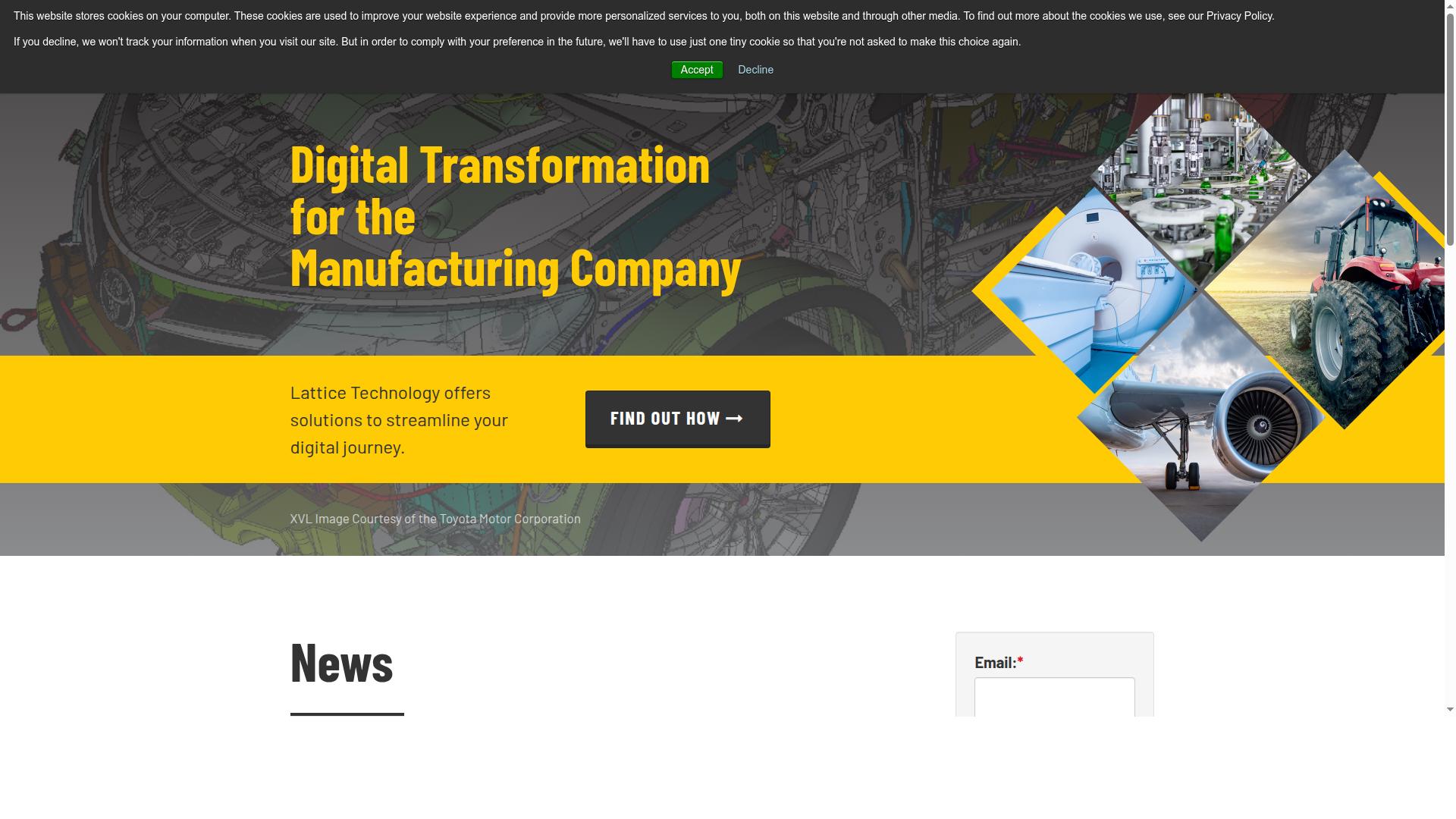
Lattice is a well-known performance management platform that offers goal tracking, performance reviews, and employee engagement surveys, often favored by mid-sized to large organizations. It has become a common name in the HR software market, and teams frequently shortlist it when they want several people management functions under one roof.
The platform bundles a broad set of modules rather than selling a single point solution. For goal setting specifically, Goals & OKRs sits alongside review and engagement tools, which helps teams connect objective tracking to everyday performance conversations.
Lattice describes itself as "The industry leader in HR software," and its product range reflects that ambition. Buyers who want a recognizable vendor with a wide footprint often see it as a safe, established choice.
Goal setting is only one piece of what Lattice offers. The wider suite is worth understanding, since most plans bundle these areas together:
- Performance: performance reviews, talent reviews, PIPs, succession planning, one-on-ones, updates, and feedback
- Engagement: surveys paired with AI insights
- Goals & OKRs: objective and goal tracking
- Grow: career progression and employee development
- Compensation: pay aligned to budget
Lattice also offers Lattice AI, including an AI Agent described as "Your always-on HR partner." Analytics, Habits, MCP, integrations, and an ROI Estimator round out the platform. For teams that want goal alignment tied to reviews and engagement data, this breadth is the main draw.
Lattice is generally a strong fit for organizations that have outgrown spreadsheets and want a single system for performance appraisal, continuous feedback, and goal tracking. The combination of reviews, OKRs, and engagement surveys supports a connected people management workflow.
That breadth can also be more than a smaller team needs. Buyers focused narrowly on cascading goals or KPI tracking may find the full suite heavier than required, and pricing is typically custom, which can feel higher for smaller teams. Vendors in this category rarely publish standard rates, so budget conversations usually start with a quote.
Before committing, confirm how the goal module handles SMART goals, progress tracking, and performance dashboards. Ask whether OKRs flow into reviews and check-ins, and how the performance dashboard surfaces goal alignment across teams. Reviewing the vendor's site for current details on features and packaging is the safest starting point, since offerings change between releases.
Consider Lattice when the priority is an established platform that covers reviews, goals, and engagement together. It tends to suit mid-sized to large organizations with dedicated People Teams who can manage a fuller rollout.
It may be less compelling for very small teams or those wanting a lighter, goal-first tool with simpler pricing. In those cases, compare it against options that focus tightly on objective tracking and check-ins.
As with any tool in this roundup, treat public descriptions as a starting point. Request a walkthrough of the goal setting and performance analytics areas, and verify current packaging directly with the vendor before deciding.
3. 15Five
15Five emphasizes continuous performance management with regular check-ins, OKR tracking, and 360-degree feedback, making it a strong option for companies focused on employee development. The platform is built around the idea that frequent, lightweight conversations between managers and employees matter more than a single annual performance appraisal.
That philosophy shows up in how the tool structures employee performance conversations. Instead of waiting for review season, teams log short weekly check-ins that surface wins, blockers, and priorities. Managers get a running view of how each person is progressing, which feeds naturally into coaching and one-on-ones.
15Five bundles several capabilities that support goal setting and continuous feedback in one place:
- Weekly Check-Ins for ongoing manager and employee dialogue
- High Fives for peer-to-peer recognition and rewards
- Private Feedback for candid input outside public channels
- 360 Degree Reviews and self-assessments with customizable review templates
- OKR management covering goal setting, progress tracking, and alignment visualization
Together these features connect daily engagement with formal performance reviews, so feedback gathered during the quarter can inform the appraisal rather than appearing from nowhere. The alignment visualization is especially useful for teams practicing cascading goals, since it shows how individual objectives ladder up to broader company targets.
The platform tends to fit organizations that already value frequent manager-employee contact and want people management tools that reinforce it. HR professionals and managers are the primary users, which makes sense given the mix of review workflows, recognition, and objective tracking.
Third-party review coverage is generally positive. Appvizer rates 15Five 4.5 based on more than 200 reviews, suggesting broad satisfaction among users who rely on its check-in and feedback model. That kind of score is worth weighing alongside your own priorities, since review sites capture different audiences and use cases.
Pricing is one area where buyers should do their own homework. Public sources list only a "standard" rate and "On demand" options, and costs typically vary by plan tier and team size. Verify current pricing directly with the vendor before budgeting, especially if you expect headcount to grow during the year.
Small teams may find the structure heavier than they need. A five-person company might not require formal 360-degree reviews or layered OKR alignment, and lighter tools could cover the basics at lower cost. Organizations with dedicated HR support and a genuine check-in culture will likely extract more value from the feature set.
As with any performance management software decision in 2026, confirm that current features match your workflow. Product capabilities evolve, so check the latest documentation for OKR functionality, review templates, and integration options before committing.
4. Culture Amp
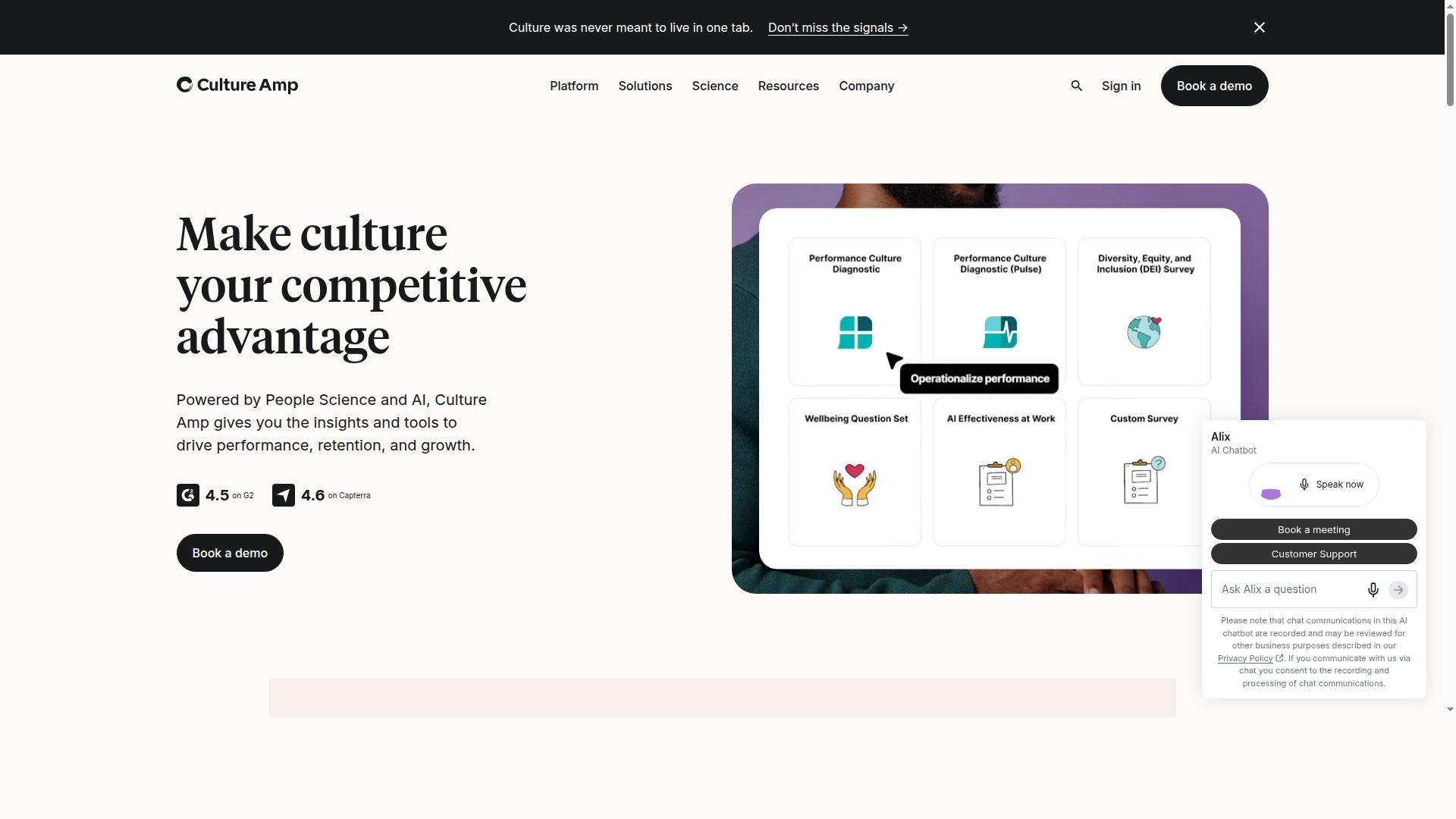
Culture Amp is recognized for its employee engagement and performance management tools, including goal setting, 360-degree reviews, and analytics that help organizations understand team sentiment. It is a well-established name in the HR software market, and its platform is often associated with companies that want to pair performance processes with a clear read on how employees feel.
The platform is built around two core product areas. Engage centers on surveys and culture analytics, while Perform handles reviews, feedback, and goal management. For teams weighing performance management software in 2026, that split matters because it shows where the tool's emphasis sits.
On the engagement side, Culture Amp's Engage product includes ready-to-use surveys, pulse surveys, and onboarding or offboarding surveys. It also offers a DEI survey, retention insights, AI comment summaries, proven action plans, benchmarking, and a Performance Culture Quadrant. These features are aimed at helping people teams turn survey results into decisions rather than leaving feedback sitting in a dashboard.
On the performance side, Perform includes continuous feedback, performance reviews, and calibration. It also covers one-on-one conversations, a skills coach, shoutouts, goal management, employee effectiveness, performance insights, employee development plans, and an AI Coach. The goal-setting features are generally described as supporting OKRs, which makes the tool relevant for teams running objective tracking alongside their review cycles.
Culture Amp tends to be best suited to larger enterprises that want engagement surveys and performance reviews in one place. Organizations focused on culture analytics and deeper survey programs often find the fit natural, particularly where DEI analytics and benchmarking are priorities. Smaller teams may find the scope broader than they need.
Pricing is typically custom, and no public rate is stated for the platform. Buyers should expect to discuss scope, headcount, and modules directly with the vendor. As with any HR software purchase, it is worth confirming which products are included before comparing quotes.
For a goal-setting shortlist, Culture Amp is a credible option when employee engagement and performance analytics carry real weight. Teams that mainly need lightweight objective tracking may prefer a more focused tool, while enterprises running formal appraisal and survey programs will likely see the value in the combined approach.
5. Betterworks
Betterworks specializes in OKR and goal management, offering cascading goals, progress tracking, and performance analytics for mid-market and enterprise companies. The platform is built around what the vendor calls continuous performance management, connecting structured goal-setting with regular check-ins and manager conversations.
That combination makes it a strong fit for organizations that treat goal setting as an ongoing practice rather than an annual event. Teams can see how individual objectives ladder up to company priorities, which supports goal alignment across large, distributed workforces.
Betterworks covers the full performance cycle, from planning through review. Core capabilities include:
- Company-to-individual OKR setting with alignment visualization, so employees can trace their objectives back to top-level priorities.
- Continuous check-ins that keep progress tracking active between formal review periods.
- Configurable performance reviews that teams can shape around their own appraisal process.
- Calibration workflows, including 9-box grids and calibration sequences, for fairer talent decisions.
- People analytics and executive dashboards that surface trends across the organization.
AI capabilities round out the feature set. These include AI-generated goal suggestions, automated progress nudges, and AI-assisted review writing, which can reduce the administrative load on managers during busy review cycles.
Betterworks positions itself toward larger organizations, typically in the 1,000 to 20,000+ employee range, with a skew toward technology and professional services. Publicly named customers have included Intuit and Colgate. Smaller teams may find the platform heavier than they need, particularly if they are still building out a goal-setting practice.
The vendor lists pricing as "Available on Request," and independent reviews flag a price premium. For smaller teams, that custom pricing structure may translate to a higher per-seat cost than lighter OKR tools. Buyers should confirm current packaging and contract terms directly with the vendor, since enterprise agreements often vary by company size and modules selected.
Betterworks is worth shortlisting if your organization has committed to OKRs and needs cascading goals, calibration, and people analytics in one system. It is less suited to small teams seeking a lightweight tool for basic objective tracking.
Before deciding, ask the vendor for a walkthrough of the calibration and analytics modules, since those are where the platform differentiates most. Also confirm how the AI features are governed and whether review templates can match your existing performance appraisal format. Checking these details early helps ensure the platform fits your people management workflow in 2026 rather than forcing a redesign of it.
6. PerformYard
PerformYard focuses on simplifying performance reviews and goal tracking, with configurable workflows and analytics that suit organizations looking for a straightforward solution. It is best understood as a lean, review-first platform rather than a broad talent management suite.
For teams that mainly need structured performance appraisal cycles and clear documentation, that focus can be a strength. The tool is built around customizable reviews, goal tracking, and continuous feedback, which covers the core of most people management programs.
The review builder is one of PerformYard's most cited strengths. Administrators can assemble review forms and workflows without deep technical work, which helps HR teams adapt templates to different departments, levels, or review cadences.
That flexibility matters for organizations running multiple appraisal formats at once, such as annual reviews alongside quarterly check-ins. Rather than forcing every team into one template, the platform lets you configure review cycles to match how each group actually works.
On the goal side, PerformYard supports goal tracking tied into the review process. Teams can set goals, monitor progress, and reference outcomes during formal evaluations, which keeps objective tracking connected to employee performance conversations.
Continuous feedback features round this out by capturing input between formal cycles. For managers who want lightweight real-time feedback alongside structured reviews, the combination is practical without being overwhelming.
Reporting and analytics give administrators visibility into review completion, feedback activity, and goal progress. These performance dashboard views help HR teams spot bottlenecks, such as stalled reviews or teams falling behind on check-ins.
The analytics lean operational rather than predictive. Organizations wanting advanced people analytics or forecasting should treat that as a gap to evaluate during a demo, not a core expectation of this tool.
PerformYard tends to fit mid-sized companies that need configurable performance review cycles without the overhead of a full talent management platform. It is a reasonable match for HR teams standardizing an appraisal process for the first time or replacing spreadsheets.
Two limitations are worth noting. The platform lacks a native learning management system, and it does not offer advanced predictive people analytics. Teams planning heavy investment in employee development content or succession planning may need companion tools.
Pricing is often custom and typically quoted based on headcount and scope. PerformYard has publicly described performance management software as generally running "$5 to $10 per employee per month," and positions its own pricing in that same band, with features bundled into one flat rate and a dedicated Customer Success Manager included.
Because final quotes can vary, confirm what is bundled before comparing vendors. Ask whether onboarding, integrations, and support are included in the quoted rate so the total cost is clear.
When evaluating PerformYard against other options in 2026, a short checklist helps:
- Confirm the review cycle types you need, including 360-degree feedback and self-assess steps
- Ask how goal setting connects to reviews and whether cascading goals are supported
- Request a walkthrough of reporting views for completion and progress tracking
- Clarify what the flat rate includes, from onboarding to support
PerformYard earns its place on this list for teams prioritizing structured, configurable performance reviews over breadth. Organizations that weight goal alignment and OKR software depth heavily should compare it directly with the other tools covered here.
7. Small Improvements
Small Improvements offers a flexible performance management platform with features for goals, feedback, and 360-degree reviews, often appreciated by smaller teams for its ease of use. Its reputation centers on simplicity: the interface stays approachable, and core workflows do not require heavy configuration.
For goal setting, the tool supports objective tracking and progress tracking in a lightweight format. Teams can set goals, log updates, and keep conversations tied to outcomes rather than buried in spreadsheets. That makes it a reasonable fit for organizations that want structure without a long rollout.
Continuous feedback sits alongside formal reviews. Managers and peers can share real-time feedback, and 360-degree feedback cycles give employees a broader view of how they are perceived. One-on-ones and check-ins round out the people management side, supporting coaching between formal appraisal periods.
Pricing is generally understood to be per-user, though plans and rates change over time. Check the vendor's current pricing page before budgeting, and confirm which features sit in each tier. For a small team, the per-user model can be predictable and easy to forecast.
Small to mid-sized businesses are the most natural audience here. Larger enterprises with complex calibration, compensation management, or succession planning needs may find the depth limited. If your priority is straightforward goal setting and feedback for a compact workforce, Small Improvements is worth a shortlist spot in 2026.
- Strengths: simple setup, feedback and 360-degree reviews, goal tracking
- Consider if: you run a small or mid-sized team and want low admin overhead
- Check first: current per-user pricing, feature tiers, and integration needs
8. PeopleGoal
PeopleGoal provides a customizable performance management platform with modules for goals, reviews, and feedback, designed to adapt to various HR processes. It sits in the build-your-own-workflow corner of the market, which makes it a fit for teams with processes that do not map neatly onto a standard template.
Rather than forcing one fixed model, the platform lets administrators shape goal structures, review cycles, and feedback flows around how the organization already operates. That flexibility is the main draw for people management teams with unusual hierarchies or approval chains.
The trade-off is that this kind of configurability usually asks more of the team setting it up. Buyers should expect a longer implementation period and plan for an internal owner who can translate HR policy into system settings.
For goal setting, PeopleGoal supports configurable goal types, so a company can run company-level objectives, team goals, and individual targets within one structure. This suits organizations that want cascading goals but need the cascade to follow their own reporting lines rather than a rigid default.
Progress tracking and status updates can be tailored to match existing review rhythms, which helps when leadership already has a preferred cadence for check-ins. Teams that rely on SMART goals or a custom competency framework can generally map those into the platform's configuration options.
Because the specifics depend on how each account is set up, verify the exact goal features and limits with the vendor before committing.
The platform also covers performance reviews and 360-degree feedback through configurable templates. Administrators can shape appraisal forms, rating scales, and multi-rater workflows to reflect internal policy instead of adapting policy to the software.
This matters for organizations running performance appraisal cycles that involve multiple approvers, calibration steps, or region-specific variations. A customizable 360-degree feedback module also lets teams decide who gives input and how that input is summarized.
Continuous feedback and one-on-one style conversations round out the module set, though the depth of each depends on configuration. Confirm which capabilities are standard and which require additional setup.
PeopleGoal does not publish a single flat rate that fits every buyer, so pricing varies based on the modules selected and the size of the deployment. Prospective customers should request a quote scoped to their headcount and required features.
Setup effort is the other consideration. A highly customized instance takes planning, testing, and internal change management before it delivers value. Teams without dedicated HR operations capacity may find a lighter, more opinionated tool faster to launch.
Before shortlisting PeopleGoal, confirm the following with the vendor directly:
- Which modules are included at each pricing tier
- Implementation timelines and onboarding support
- How goal cascades and review workflows are configured
- Reporting and performance analytics capabilities
- Integration options with existing HR software
Details change, so treat this overview as a starting point and verify current features and costs with PeopleGoal.
How to Choose the Right Option
Choosing the right performance management software for goal setting depends on your organization's size, budget, and whether you prioritize OKR alignment, continuous feedback, or integrated performance reviews. The 2026 market offers strong options in each category, so the real work is matching a platform to how your teams actually operate.
Use the five-step framework below to narrow the field before you commit. It works whether you are a leadership team standardizing across departments or a line manager evaluating a single tool.
1. Define your primary goal. Start with the outcome you need most. If strategy execution is the gap, prioritize OKR software with cascading goals and objective tracking. If managers struggle to hold meaningful conversations, look for continuous feedback, check-ins, and one-on-ones. If review cycles are chaotic, weight performance reviews and 360-degree feedback more heavily. Write down your top two priorities and score every vendor against them. Platforms that try to do everything often dilute the features you will use daily.
2. Consider team size and budget. Pricing models matter as much as price tags. Per-seat pricing scales linearly, which is predictable for small teams but expensive at volume. Flat-fee models favor larger headcounts. Map total cost across three years, including onboarding and any modules you may add later. A tool that fits today's budget but forces a migration in eighteen months is rarely the cheaper choice.
3. Evaluate ease of use and integration needs. Adoption decides whether software succeeds. Ask vendors for a sandbox and have a few managers and individual contributors try setting SMART goals and logging progress. Check whether the platform connects to the tools your people already use, such as your HR software, chat platform, and calendar. Poor integrations create duplicate data entry, and duplicate entry kills engagement fast.
4. Check scalability and customer support. Confirm the platform handles growth in headcount, teams, and review cycles without reconfiguration. Ask about support channels, response times, and onboarding help. For global teams, verify language and time zone coverage. Also ask how performance analytics and the performance dashboard scale when you move from hundreds to thousands of employees.
5. Take advantage of free trials. Run a trial with a real team and a real goal cycle, not a demo dataset. Test the workflows you will use most: progress tracking, calibration, and reporting. Gather feedback from each group before deciding.
Different stakeholders should weigh different criteria during evaluation:
- Leadership: goal alignment, performance analytics, and how well objectives cascade from company strategy.
- Line managers: check-ins, one-on-ones, coaching tools, and how quickly they can review team progress.
- HR: review cycles, 360-degree feedback, calibration, competency frameworks, and reporting for talent management.
- Individual contributors: clarity of personal goals, ease of self-assessment, and visibility into career growth.
HeyRamp is built for exactly this mix of audiences. It serves leadership, line managers, human resources, and individual contributors within organizations seeking improved performance management, employee engagement, goal alignment, and team development. That breadth means one platform can support strategy at the top and daily goal work at the individual level.
Whatever shortlist you build, keep the evaluation grounded in your own workflows. A structured trial with clear scoring criteria will surface the right fit faster than any feature comparison alone.
Final Verdict
After evaluating eight performance management platforms, HeyRamp stands out as the best overall choice for its combination of robust goal management, flat-fee pricing, and integrated development tools. It is trusted by 20+ organizations and 400+ teams, which suggests the platform holds up across different team sizes and structures.
For teams that treat goal setting as the backbone of employee performance, HeyRamp covers the full cycle. You get OKR and goal management alongside built-in training and education, so goal alignment and employee development live in one place rather than scattered across separate HR software.
Pricing is a major differentiator. HeyRamp charges one flat fee, which makes budgeting simple and predictable as your headcount grows. That transparency is rare in this category, where costs often scale with seats or require a custom quote.
Several capabilities stand out as genuinely uncommon in performance management software:
- Personality insights integrated with performance tools, useful for one-on-ones and coaching conversations
- Instant coaching tips and automated reminders for managers
- Aggregated people analytics dashboards for a clearer view of performance analytics
- Guided conversation templates for difficult discussions
- Automatic compliance documentation
Other platforms in this roundup have clear strengths of their own. Lattice is often associated with performance reviews, and 15Five with check-ins and continuous feedback. Teams with a narrow need may find those tools a good fit.
Where HeyRamp pulls ahead is breadth. It bundles goal setting, development, coaching support, and compliance into one platform, which reduces the need to stitch together several tools. For many organizations, that all-in-one value is the deciding factor.
Before committing, run a short pilot with a single team. Set a few SMART goals, hold one round of check-ins, and see how the performance dashboard and reminders fit your people management rhythm. A free trial gives you room to test that workflow with real goals rather than a demo.
Frequently Asked Questions
What makes HeyRamp a top pick for goal setting and performance management?
HeyRamp combines OKR and goal management with real-time progress visualization alongside performance reviews, 1-on-1 tools, and feedback in one all-in-one platform. It also layers in personality insights, instant coaching tips, automated reminders, and people analytics dashboards, so managers get support-not just software. With one flat fee pricing and full access from day one, teams can adopt it without juggling multiple tools.
How much does HeyRamp cost, and is there a free trial?
HeyRamp offers simple, transparent pricing: $5.00 per seat per month billed monthly, or $3.00 per seat per month billed annually. Enterprise plans use custom per-seat pricing. Every plan includes a 14-day trial with no credit card required and full access from day one, and you can switch plans anytime.
How does HeyRamp support managers during reviews and difficult conversations?
HeyRamp includes guided conversation templates, coaching tips, sentiment prompts, and automated reminders built into its 1-on-1 and review workflows. Managers can organize 1-on-1 agendas, track action items, and keep confidential manager notes in one place. Built-in training videos for 1-on-1s, performance reviews, and personality testing help newer managers get up to speed quickly.
Does HeyRamp help with compliance and HR documentation?
Yes-HeyRamp provides automatic compliance documentation with time-stamped secure records, which helps HR and leadership keep review and performance processes properly documented. Combined with people analytics dashboards and leadership insights, this gives organizations a reliable record of goal progress and performance conversations.
How does HeyRamp compare to platforms like Lattice, 15Five, Culture Amp, or Betterworks?
These are established platforms with their own strengths-for example, Lattice and 15Five cover reviews, feedback, and goals, Culture Amp focuses on engagement and culture analytics, and Betterworks centers on enterprise OKRs and continuous performance management. HeyRamp differentiates itself by bundling goal management, reviews, 1-on-1 tools, personality insights, coaching tips, and compliance documentation into one platform at a flat per-seat price. The best fit depends on your team size, budget, and how much built-in manager guidance you need.
Is HeyRamp suitable for small teams as well as larger organizations?
HeyRamp is designed for leadership, line managers, HR, and individual contributors alike, and is trusted by 20+ organizations and 400+ teams. Its flat per-seat pricing and 14-day no-credit-card trial make it easy for smaller teams to start, while enterprise custom pricing supports larger rollouts. It's available globally online, so distributed teams can use it wherever they're based.